



Nescafé Dolce Gusto® capsules: coffee, milk drinks and other flavours from one machine
Nescafé Dolce Gusto®: what this guide covers
In many homes, a Nescafé Dolce Gusto® capsule machine is used for more than just making coffee.
The same machine can also be used for milk drinks, chocolate, tea and infusions, so everyone in the household can choose what they like.
The choice is wide because, alongside the original capsules, there are also compatible capsules, and each of these two groups has its own characteristics.
This arrangement makes the choice easier, because you can start with one kind of drink and, over time, discover others, depending on your own tastes and the habits of the household.
We begin with the most important information about the system and then move on to the individual groups of drinks, one after another.
In this guide we explain what sets the Dolce Gusto® system apart, and we describe coffee in capsules, from espresso to decaffeinated versions.
We also cover milk drinks and chocolate, as well as tea, infusions and other flavours that can be prepared with the same machine.
At the end we talk about storing capsules, about cups and about what to do with used capsules.
The guide is meant both for those who already own this machine and for those who are still thinking about getting one.
The descriptions in the guide are general and do not replace the information the producer gives on the packaging of each product.
We have gathered all the options, original and compatible, in our Dolce Gusto® capsules category, where the choice changes according to the current range.
What sets the Dolce Gusto® system apart
The most important feature of the Dolce Gusto® system is that a single machine prepares many kinds of drinks.
Coffee, milk drinks, chocolate, tea or infusions are all prepared with the same appliance, changing only the capsule.
In practice, this means that with one machine you can choose a coffee in the morning, a milk drink in the afternoon and something lighter in the evening.
For families and small offices this can be a convenient solution, because each person chooses a drink according to their own tastes.
As a result, the kitchen does not need several different appliances for different drinks.
The Nescafé Dolce Gusto® machines are available in compact versions, so it is usually easy to find a place for them in the kitchen.
For those who are still choosing a machine, it also matters that the choice of capsules is not limited to one kind of drink.
Dolce Gusto® is not a completely closed system: alongside the original capsules there are many compatible capsules.
Compatible capsules widen the choice of drinks, and the system offers much more than coffee alone.
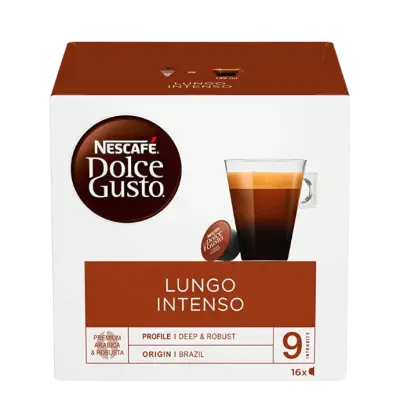
Our range includes original Nescafé Dolce Gusto® capsules: espresso, lungo, decaffeinated coffee, milk drinks and chocolate drinks.
Original capsules can be a good choice for those who prefer to rely on the system maker's own range.
Compatible capsules, on the other hand, may appeal to those who want to try more blends and flavours.
There is no choice that is best for everyone, because much depends on personal taste and on the drinks people have at home.
Coffee in Dolce Gusto® capsules: espresso, lungo and decaffeinated
Let us begin with coffee, which for many people is the main reason for buying a machine.
Among the capsules we find espresso, a small, concentrated coffee, and lungo, a longer coffee that is usually milder on the palate.
Coffee from a capsule is usually prepared quickly, which for many people simplifies the daily routine, for example in the morning before leaving the house.
These names come from the Italian bar, and what they mean for capsules may differ somewhat from what is served in a bar.
Those who would like to learn more about the Italian names of coffees can read our guide to types of Italian coffee.
Capsules can differ in intensity, and the intensity scale is described differently by different producers.
For this reason, when choosing, it is worth looking at the taste description given with the product, and not only at the number or the name.
People who like a milder coffee and those who prefer a stronger one will generally find something to suit them.
It is also worth thinking about the time of day, because many people choose one coffee for the morning and another for the afternoon break.
For those who wish to reduce caffeine, capsules of decaffeinated coffee are available.
Decaffeinated coffee generally contains much less caffeine, but it is not completely free of it.
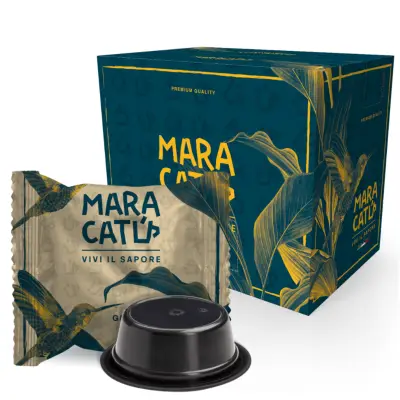
For the Dolce Gusto® machine we also offer the compatible capsules of our own brand Maracatú, that is, coffee blends with different characters.
The products available change according to the range at the time.
Milk drinks and chocolate in capsules
For many people, milk drinks are an important part of the Dolce Gusto® system.
They include drinks in the style of cappuccino or latte macchiato, in which coffee is combined with milk.
Some milk drinks are prepared with two capsules: one with milk and one with coffee.
Such drinks can be prepared every day or for guests who like milder flavours.
For this reason, when choosing a pack, it is worth checking the label to see how many capsules are needed for one drink.
Milk drinks contain milk, which matters for people with an allergy or an intolerance.
It is worth remembering that the type of milk and the recipe may differ from one product to another, so the best source of information is the composition on the packaging.
The wording lactose-free does not necessarily mean milk-free, so it is always worth reading the ingredients.
Chocolate in capsules is a drink generally made with a cocoa base, which many people associate with a sweet break, especially on colder days.
Cocoa naturally contains theobromine and small amounts of caffeine, so chocolate should not be considered a completely caffeine-free drink.
The consistency depends on the recipe, so the drink may turn out lighter or creamier than chocolate served in a café.
Milk and chocolate drinks may contain sugar and other ingredients, and the composition differs from one product to another.
For children, the choice should take into account age, caffeine, sugars and allergens, and it is always worth reading the label.
Tea, infusions and other flavours
The Dolce Gusto® system also includes drinks that are not coffee.
Among the capsules we find tea and infusions, which suit the moments when coffee is not the first choice.
In this way the machine can also serve people who do not drink coffee at all or drink it only rarely.
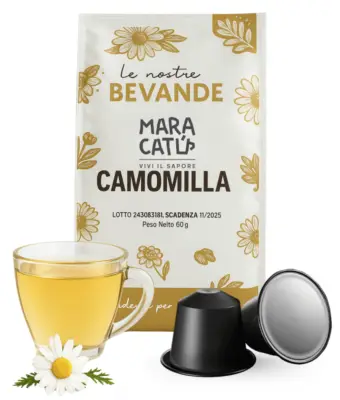
Among the compatible capsules of the Maracatú brand there are also drinks flavoured with chamomile, ginseng and caramel.
Longer drinks are usually served in a larger cup, so it is worth choosing a vessel from which tea or an infusion is comfortable to drink.
A wider choice of teas and infusions, also in other formats, can be found in our tea category.
Chamomile and other herbal infusions can have different compositions, so it is worth reading the label.
Ginseng drinks are not automatically caffeine-free, because they may also contain coffee.
The composition changes according to the brand and the recipe, so it is best to check the list of ingredients of the chosen product.
Before buying, it is worth reading the description, because original and compatible capsules may have different compositions even when the name of the flavour is similar.
Caramel-flavoured drinks can be sweet and creamy, and their composition, including the presence of sugar and milk, depends on the recipe.
Those who prefer a lighter drink in the evening can read our article on decaffeinated coffee and infusions in the evening.
This information does not replace medical advice: those who need to watch their caffeine for health reasons can consult a specialist.
Storing capsules, cups and used capsules
Capsules are generally best stored in a dry place, away from light and strong smells, in their original packaging.
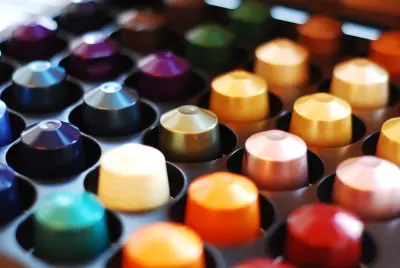
In everyday use, capsule holders are convenient, as they keep the supply tidy next to the machine.
They make it easy to see which flavours are at hand and to choose a drink to suit the mood.
For espresso a small cup is usually used, while for longer drinks, milk drinks or chocolate a larger cup or a glass is used.
Cups and other extras can be found in the accessories category.
The choice of vessel depends on personal taste, on the kind of drink and on how comfortable it is to drink from that cup.
After preparing drinks with milk or chocolate, the machine can be rinsed following the manufacturer's instructions.
The details of cleaning and maintaining the machine are described in the manufacturer's instructions, which are worth consulting.
We have gathered information about used capsules in our article on what to do with used capsules.
Waste separation rules may vary from one municipality to another, so it is worth checking the local guidelines.
To sum up, the Dolce Gusto® system makes it possible to prepare coffee, milk drinks, chocolate, tea and infusions with a single machine, and original and compatible capsules widen the choice.
The choice depends on personal taste, on the time of day and on who uses the machine, and for every drink it is worth reading the label.
If you are not sure which capsules are a good starting point, contact us: the Maracatú team is always happy to help you choose the capsules that best suit your machine and your tastes.
Popular products
All products
More



More on this topic
More
Coffee capsules vs traditional: what to choose for home?
Read article


Coffee Capsules Guide: How to Choose Your Perfect Taste
Read article
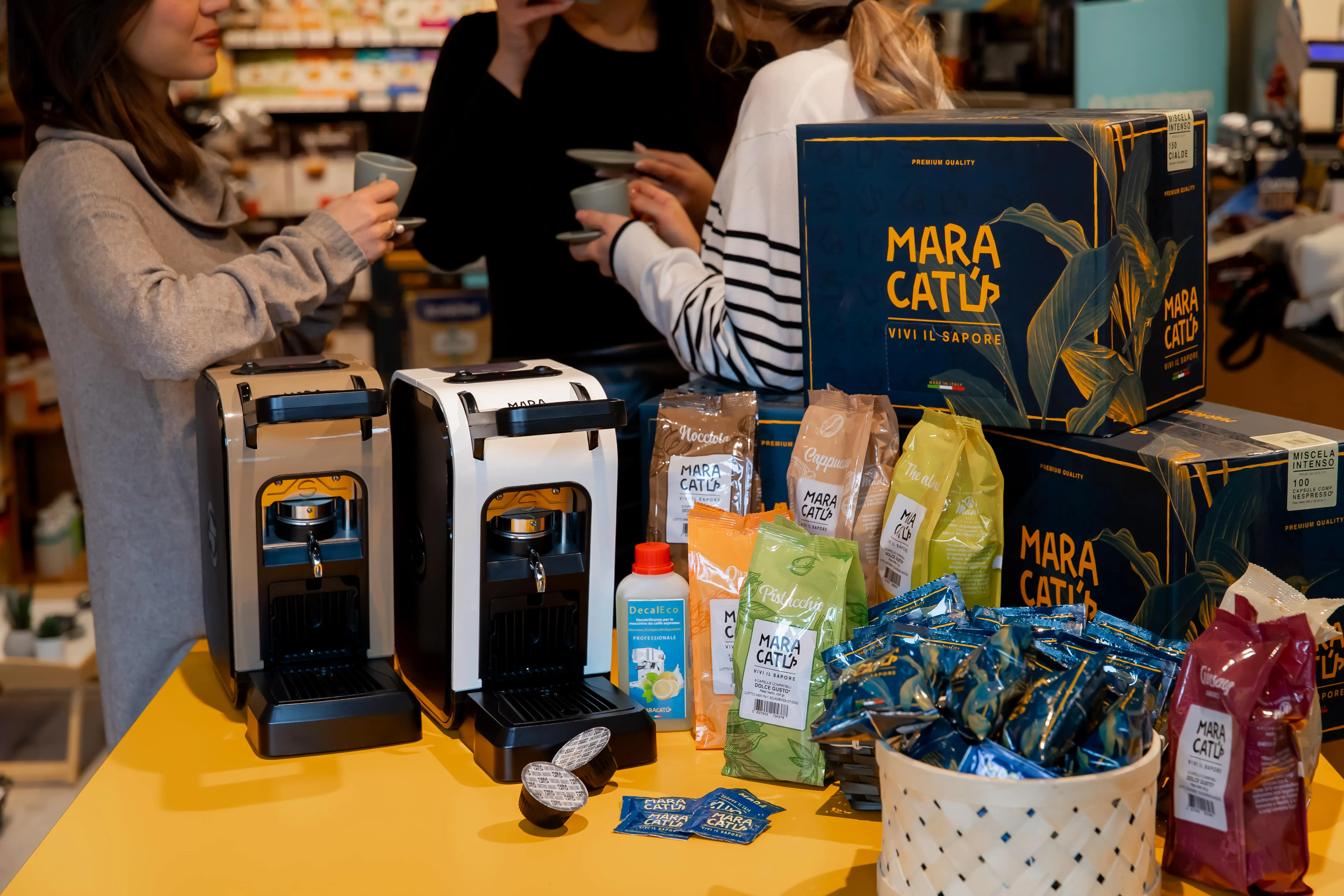
5 myths about capsule coffee
Read article
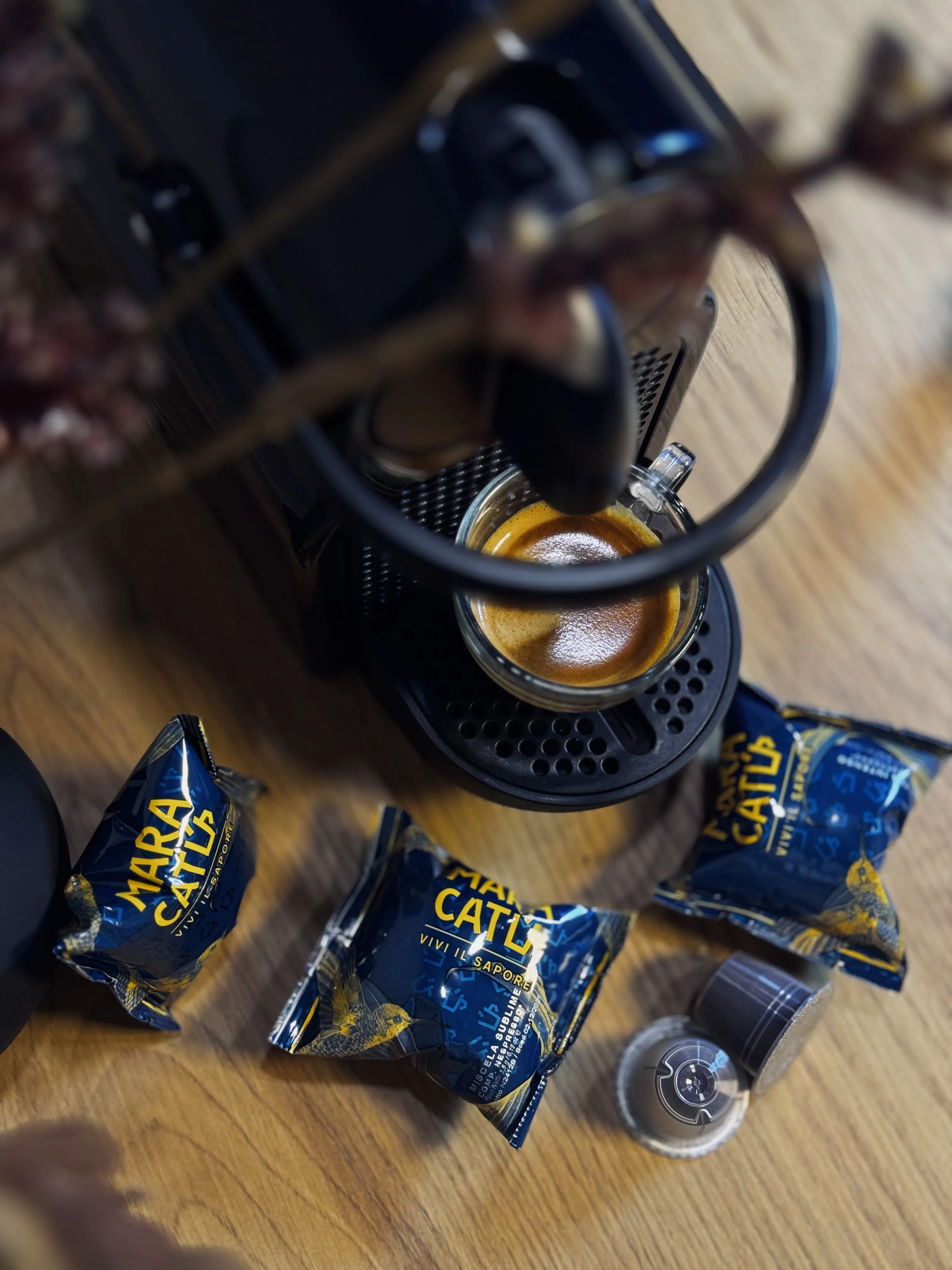
How to properly store coffee and coffee capsules: expert advice
Read article

Coffee at the office: choosing the system, the machine and the accessories for a team
Read article
What to serve with coffee the Italian way: sweets, pistachio creams and specialities
Read article
Decaf coffee and infusions: what to drink in the afternoon and evening
Read article
How to taste coffee at home: a guide for beginners
Read article
Coffee brewing methods: moka pot, espresso, French press and filter — which to choose
Read article
Used coffee grounds: what to do with them instead of throwing them away
Read article

Coffee and sport: when caffeine helps and when it gets in the way
Read article

Caffeine in the cup: how much we really drink
Read article