


Panettone: what it is and how to choose a flavour for the holidays
Panettone on the festive table: where to begin
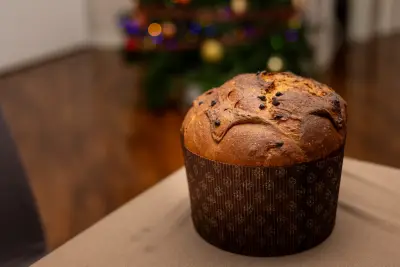
A tall, golden cake with a domed top, scented with butter and citrus, cut at the festive table and served with coffee: for many families this is what an Italian Christmas looks like.
Panettone also finds its way into Polish homes, as a dessert for the holidays or a gift for loved ones.
Choosing can be harder than it seems, because there are many versions: with candied fruit, with chocolate, without fruit, and even with a spread in a separate jar.
Sizes and packaging vary too, from small portions to large cakes in decorative tins.
Many people wonder which flavour will be best received at the table, especially when the guests have different preferences.
In this guide we look at what panettone is, what its main flavour families are and how to match the choice to the guests at the table.
We also cover sizes and packaging, and what is worth checking on the label before buying.
We work with Italian sweets every day, so we are happy to share a few tips that can make the choice easier.
Panettone is also chosen as a gift for people who enjoy Italian sweets and good coffee.
Our range includes, among other things, the baked goods of the family pastry shop Fiasconaro from Castelbuono in the Madonie mountains of Sicily.
That way, choosing a flavour can become a calm and pleasant part of the holiday preparations.
What panettone is
Panettone is a tall yeasted cake whose tradition comes from Lombardy and Milan.
Its most recognisable feature is the domed top, usually baked in a paper mould that helps it keep its tall shape.
Typical of panettone is the long rising of the dough, which takes longer than for many other baked goods.
Many pastry shops use natural leavening for this, called lievito madre in Italian.
The result is usually a light, soft crumb with a buttery aroma.
Making panettone takes time and patience, and the result depends on the care taken throughout the process.
Once baked, the cake has a soft crumb in which the additions, such as pieces of fruit or chocolate, can be seen.
Eggs, butter and sugar are usually added to the dough and, in the classic version, candied citrus fruit and raisins.
Panettone is traditionally eaten over the festive season and, in many Italian homes, also for breakfast.
The name echoes the Italian word pane, meaning bread.
Various legends are linked to the origins of panettone, featuring old Milanese courts and pastry cooks.
There is no single, certain version of these stories, so they are best treated as curiosities.
Today panettone is made in many ways, and each pastry shop has its own recipes.
That is why two cakes with the same name can differ in taste, texture and ingredients.
The main flavour families
Panettone can be grouped into several flavour families, and each may appeal to different people.
This division is simplified, because in practice a single cake can combine several additions at once.
The most common versions are the following:
Classic, with candied citrus peel and raisins. The Tradizionale version by Fiasconaro contains candied orange and raisins flavoured with Marsala and Zibibbo wine.
Chocolate, with chocolate chips and icing, like the Cioccolato version. This family also includes Montenero, a dark cake with Sicilian chocolate and cocoa, with a hint of lemon.
Without fruit, that is, without raisins or candied fruit, for those who do not particularly like them.
Citrus, with added citrus fruit and, in some versions, saffron.
With a spread in a separate jar, for example the Oro Verde version with pistachio cream and a spatula.
Classic versions are closest to tradition, chocolate ones have more of a dessert character, and versions with a spread let everyone add the cream to the cake themselves.
The differences show in the appearance too: versions with icing have a layer of icing on the dome, while classic ones have a golden crust without decoration.
If you are not sure which version to choose, the description of the ingredients on the product page can help.
Pistachio lovers will find more ideas in our section of pistachio products from Italy.
Other Italian baked goods and specialities can be browsed in the Italian sweets section.
How to match the flavour to the guests
There is no single panettone that is best for everyone, so the easiest place to start is with the guests at the table.
People who value tradition may enjoy the classic version with candied peel and raisins.
When children are at the table, many families choose a chocolate version, which is sometimes closer to their taste.
For those who do not care for raisins and candied fruit, a version without fruit may be a good choice.
Pistachio lovers may like the version with a spread, which everyone adds to their own slice.
When guests have different tastes, two different cakes in smaller sizes can be served.
With a larger number of guests, combining one safe version, for example the classic one, with a more original one can work well.
With a sweet cake many people choose coffee without sugar, so it is worth allowing for that option too.
It is also worth considering whether the cake will be the main dessert or a small accompaniment to coffee after lunch.
Another important aspect is the ingredients: panettone usually contains gluten, eggs and milk, and some versions also contain nuts.
In some versions the raisins are flavoured with wine, for example Marsala, which matters when the cake is served to people who do not drink alcohol.
For this reason it is always worth reading the label, especially if someone has a food allergy.
When choosing for children, it is also worth taking into account their age, the sugar content and possible allergens.
If you are unsure about your guests' tastes, the classic or the chocolate version can be a good starting point.
Sizes and packaging: from small portions to large cakes
Panettone comes in different sizes, from small portions to large cakes for many people.
Small portions, also in decorative packaging, for example in the shape of a bauble, can be a good idea for a small gift.
Medium sizes, of around half a kilogram, may be enough for a small family.
Cakes of about a kilogram can be a convenient choice for a festive table with several people.
Larger cakes also exist, intended for bigger gatherings.
When choosing the size, it is worth remembering that panettone is sometimes served not only on one day but also on the following days of the holidays, for example at breakfast.
The size of the cake is also worth matching to the place where it will be stored and served, so that it fits on the table and in the kitchen.
Some cakes are sold in decorative tins, which can in themselves be part of the gift.
Once the cake has been eaten, the tin can serve as a container for small items or sweets.
For gifts for several people, a few small cakes can be combined instead of one large one.
We describe ideas for extras to go with such a gift in our guide on how to choose coffee as a gift.
Coffee can also be added to such a gift, for example from our section of whole bean and ground coffee.
What to check before buying
Before buying, it is worth checking a few details on the packaging.
The first is the ingredients, with the allergens and the possible presence of alcohol in the raisins or other additions.
The second is the best-before date given by the producer on the packaging.
It is also good to check that the packaging is not damaged, especially in the case of delicate decorative boxes.
It is also worth looking at what is in the box, because some versions include extras, such as a cream in a jar with a spatula.
It is worth making sure that the weight of the cake given on the packaging matches the number of guests and the days on which it will be served.
It is also useful to plan where the cake will wait until the holidays, because the way it is stored can affect its taste and texture.
Tips on storing, cutting and serving are collected in our article on how to store, cut and serve panettone.
For many people it also matters to match the cake to the occasion: one for a family lunch, another for a gift to friends or colleagues.
In short, panettone comes in classic, chocolate, fruit-free, citrus and spread versions, so there can be something for many tastes at the table.
At heart, what matters is that the cake that reaches the table pleases the guests and accompanies the shared celebration over a cup of coffee.
If you need help choosing a flavour or size, contact us: the Maracatú team is always happy to help you choose.
Popular products
All products
More



More on this topic
More

Coffee capsules vs traditional: what to choose for home?
Read article


Coffee Capsules Guide: How to Choose Your Perfect Taste
Read article
5 myths about capsule coffee
Read article
How to properly store coffee and coffee capsules: expert advice
Read article

Coffee at the office: choosing the system, the machine and the accessories for a team
Read article
What to serve with coffee the Italian way: sweets, pistachio creams and specialities
Read article

Decaf coffee and infusions: what to drink in the afternoon and evening
Read article

How to taste coffee at home: a guide for beginners
Read article
Coffee brewing methods: moka pot, espresso, French press and filter — which to choose
Read article
Used coffee grounds: what to do with them instead of throwing them away
Read article

Coffee and sport: when caffeine helps and when it gets in the way
Read article

Caffeine in the cup: how much we really drink
Read article