





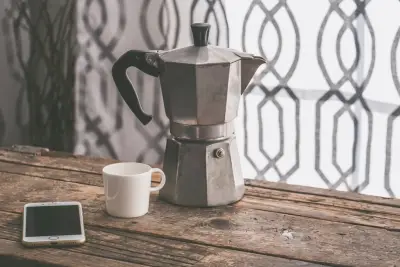
How to taste coffee at home: a guide for beginners
Why taste coffee at all
Tasting sounds like a ceremony: special spoons, scoring sheets, vocabulary nobody uses in a kitchen. We look at it more simply. In more than fifteen years working with coffee we have noticed that people who once compared two coffees side by side buy far more accurately afterwards — and end up with fewer packs pushed to the back of the shelf because they “weren't quite right”.
That is the whole point. Tasting is not about talking elegantly about coffee. It is about learning to name your own preferences: whether you like a pronounced bitterness or something softer, whether you are after dense body or fruity aroma.
You need nothing special for it. Two different coffees, the same brewing method, good water and ten quiet minutes are enough. In this guide we go through it step by step.
Five things to look for in the cup
Professionals use elaborate score sheets, but five points are plenty to begin with. Come back to them each time and after a few coffees you will recognise them automatically.
Aroma. Smell the coffee as soon as it is brewed, before you taste it. Does it smell of nuts, chocolate, bread, fruit, flowers? That is the first and most honest piece of information.
Acidity. This is not the sour taste of a faulty coffee but liveliness — the same sensation as an apple or a citrus fruit. High acidity brightens the cup; low acidity makes the coffee feel heavier and rounder.
Body. How dense the drink feels in the mouth: watery, velvety, almost syrupy. It depends largely on the share of robusta and on the brewing method.
Bitterness. In espresso it is natural and desirable, as long as it is clean. If it is sharp and scratchy, that more often comes from too long an extraction or overheated water than from the blend itself.
Finish. How long the flavour lasts after swallowing, and whether it is pleasant. A good coffee stays with you for a moment and does not leave a dry, empty impression.
How to run a simple tasting at home
There is one rule: compare one variable at a time. If you change the coffee, the method and the cup all at once, you will learn nothing.
Pick two coffees, three at most. Preferably clearly different — an intense blend and a softer, arabica-led one, for example. Beyond four the palate gets lost.
Brew them the same way. Same method, same volume in the cup, same temperature. If you use capsules or ESE pods the job is easier, because the dose is fixed.
Mind the water. It is 98% of the cup. Filtered or lightly mineralised bottled water gives a cleaner picture of the flavour than hard tap water. It is also a good moment to check whether the machine needs descaling: limescale changes the taste more than any difference between blends.
Use identical cups. Ideally thick and pre-warmed. A cold porcelain mug can flatten exactly the differences you are looking for.
Write it down. Two words per coffee is enough: “nuts, long finish”, “bright, light”. After three sessions you will have your own map of flavours — and that is the point at which buying stops being a lottery.
Where the differences between coffees come from
Once you start noticing differences, the natural question follows: where do they come from? Three things are responsible.
The species. Arabica gives more aroma, higher acidity and a delicate sweetness. Robusta gives body, dense crema and a distinct bitterness. Italian blends traditionally combine the two — and it is the proportion that decides whether an espresso is “more like the bar” or “more aromatic”.
The roast. A darker roast brings cocoa, caramel and woody notes, lowers acidity and reinforces the impression of strength. A lighter roast preserves acidity and fruity aromas. There is no better or worse here — only what you like.
Origin and processing. Central American coffees are often associated with chocolate and nuts, African ones tend towards floral and fruity, Asian ones towards earthy and full. These are generalisations, but useful as a starting point.
In practice, the best way to feel it is to compare two blends from different roasters within the same system: Borbone, Lavazza, Kimbo, Illy and Passalacqua each have a recognisable style, while all sitting within the same Italian tradition.
What this means when you buy
The biggest benefit of tasting is practical: you stop buying descriptions and start buying what you actually like.
Write down your three words. After a few sessions it usually boils down to something like “full, chocolatey, no acidity” or “light, fruity, long”. With a description like that it is far easier to pick a new blend — including for us, when you ask for advice.
Buy small packs to try. Stocking up only makes sense once you know the blend suits you. That applies especially to ground coffee, which loses aroma fastest after opening.
Do not judge a coffee by the first cup. The first coffee after switching blends almost always tastes “odd”, because your palate is comparing it with the previous one. Give it two or three days.
Keep two different coffees at once. One for every day, one for the weekend or the evening. It is the simplest way not to tire of a single taste — and to always have a reference point.
And if you would like us to help match a coffee to your taste and your machine, write to us. Just tell us what you like: the rest is our job.
Popular products
All products
More




More on this topic
More

Coffee capsules vs traditional: what to choose for home?
Read article


Coffee Capsules Guide: How to Choose Your Perfect Taste
Read article

5 myths about capsule coffee
Read article
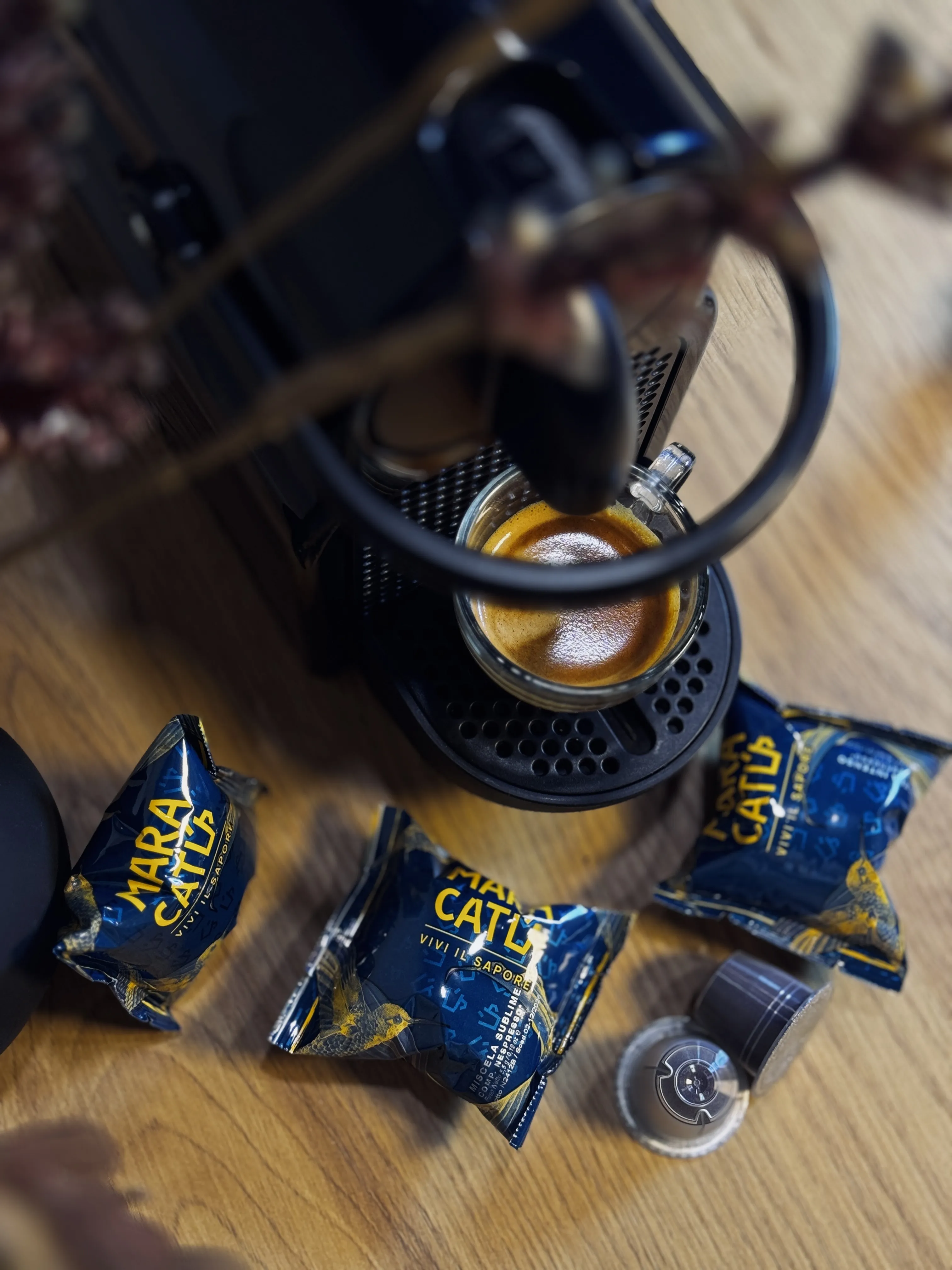
How to properly store coffee and coffee capsules: expert advice
Read article

Coffee at the office: choosing the system, the machine and the accessories for a team
Read article
What to serve with coffee the Italian way: sweets, pistachio creams and specialities
Read article
Decaf coffee and infusions: what to drink in the afternoon and evening
Read article
Coffee brewing methods: moka pot, espresso, French press and filter — which to choose
Read article
Used coffee grounds: what to do with them instead of throwing them away
Read article

Coffee and sport: when caffeine helps and when it gets in the way
Read article
Caffeine in the cup: how much we really drink
Read article
Used capsules and pods: what to do with them
Read article