





Coffee brewing methods: moka pot, espresso, French press and filter — which to choose
The same coffee, four different cups
One of the questions we hear most often goes roughly like this: I bought good coffee, but at home it tastes nothing like the bar. Usually it is not the coffee. It is the method.
Brewing is essentially the transfer of substances from coffee into water. How much makes the journey depends on three things: how finely the coffee is ground, how long it stays in contact with the water, and at what pressure. Change any one of them and the same pack yields a different cup.
Below we describe the four methods we encounter most often in homes. Each has its own logic and its own grind, and the grind is the single most common cause of disappointment.
The moka pot: the Italian classic that forgives the least
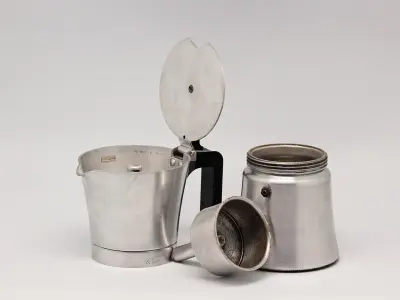
A moka pot has three parts: the lower water boiler, the funnel filter for the coffee, and the upper chamber that collects the brew. Water heated below produces steam, pressure rises, and the water is pushed up through the coffee bed.
The pressure here is modest, far lower than in an espresso machine, while contact time is fairly long. That is why the moka prefers a medium grind, clearly coarser than espresso. Coffee ground too fine clogs the filter, raises the pressure and turns bitter.
A few things that make the biggest practical difference:
Start with hot water. It shortens the time the coffee sits above a heating boiler and noticeably reduces bitterness.
Do not tamp the coffee. A moka is not an espresso machine; a compacted bed only blocks the flow. Levelling it is enough.
Take it off the heat when it starts to gurgle. The last seconds bring nothing but bitter, scorched notes.
Moka pots and accessories are in our accessories section, and coffee suited to this method is among our whole-bean and ground coffees.
The espresso machine: the shortest time, the smallest margin
Espresso is an extreme method: a very fine grind, very little water, and high pressure applied for around twenty-five seconds. The result is a small, dense cup with crema.
Because the time is so short, everything has to line up at once. Too coarse a grind and the water rushes through, leaving a thin, sour cup. Too fine and the water can barely pass, leaving bitterness behind.
In capsule and pod machines this problem effectively disappears: dose and grind are set at the factory. That is the main advantage of these systems, consistency without adjusting anything. In exchange, you give up the freedom to adjust.
Limescale is a separate matter. In an espresso machine, scale changes temperature and flow, and the taste degrades gradually, so it is easy to miss. Regular descaling and a good filter keep the parameters where they should be.
French press: the simplest method, and the most forgiving
There is no pressure here at all. The coffee simply sits in hot water for a few minutes, and a metal mesh separates the grounds from the brew at the end.
Because contact is long, the grind must be coarse, fine coffee would pass through the mesh and turn the cup to sludge. A starting ratio is roughly one tablespoon of coffee per hundred millilitres of water, four minutes, then a slow press.
A French press gives the fullest body of the four methods, because the oils are not caught by a paper filter. In exchange the drink can be slightly cloudy, which some people dislike and others prefer.
It is a good method for lighter roasts, when you want to taste origin notes. With dark Italian blends it works less well: the long contact pulls out more bitterness than needed.
One practical note: do not leave the brew in the jug after pressing. The coffee keeps extracting and turns astringent within about ten minutes.
Filter brewing: the method for a clean cup
Filter brewing, whether by hand or in a drip machine, works by letting water pass through the coffee bed and a paper filter under gravity alone.
The paper holds back oils and the finest particles, so the brew is markedly clearer than from a French press. The body is lighter, but acidity and aromatic notes come through far more sharply. Grind: medium, close to the texture of granulated sugar.
This is the method that best shows differences between origins. For anyone wondering why coffee from one plantation should taste different from another, filter answers the question more clearly than espresso does.
Water is worth remembering. Coffee is more than ninety per cent water, and in filter brewing there is neither pressure nor crema to mask its faults. Very hard or heavily chlorinated water noticeably flattens the aroma.
Which method to choose
There is no better method, only the method that matches what you want from a cup.
If consistency and speed matter most, machines, and capsule systems in particular, give the best answer: the parameters are fixed and the result is the same every morning.
If ritual and a full, strong body matter, the moka pot remains hard to beat, provided the grind is right and it comes off the heat at the right moment.
If you want to taste the character of a specific coffee, filter or French press will show it most clearly.
A closing practical tip: when changing method, change one variable at a time. Grind first, then ratio, then time. Changing everything at once leaves you unable to tell what worked.
Our coffee range and our accessories section hold both coffees matched to particular methods and the equipment for them. If you are not sure where to begin, please contact us, the Maracatú team will gladly advise.
Image: a moka pot disassembled into its parts, Coyau, CC BY-SA 3.0 (Wikimedia Commons).
Popular products
All products
More





More on this topic
More

Coffee capsules vs traditional: what to choose for home?
Read article


Coffee Capsules Guide: How to Choose Your Perfect Taste
Read article

5 myths about capsule coffee
Read article
How to properly store coffee and coffee capsules: expert advice
Read article

Coffee at the office: choosing the system, the machine and the accessories for a team
Read article
What to serve with coffee the Italian way: sweets, pistachio creams and specialities
Read article
Decaf coffee and infusions: what to drink in the afternoon and evening
Read article
How to taste coffee at home: a guide for beginners
Read article
Used coffee grounds: what to do with them instead of throwing them away
Read article

Coffee and sport: when caffeine helps and when it gets in the way
Read article
Caffeine in the cup: how much we really drink
Read article
Used capsules and pods: what to do with them
Read article