





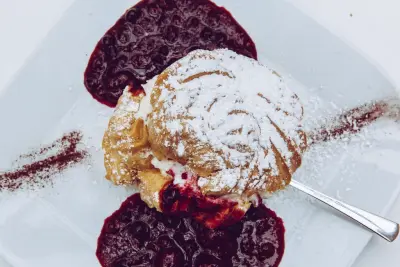
What to serve with coffee the Italian way: sweets, pistachio creams and specialities
In Italy, coffee is rarely on its own
For more than fifteen years we have been bringing Italian coffee to Poland, along with the products that sit next to it on Italian tables. That is perhaps the biggest difference between the two cultures: here coffee is often a functional drink, there it is part of a ritual in which something small and sweet almost always comes with it.
We are not talking about dessert in the Polish sense — a slice of cake. We mean a few grams of something good: a sugared almond, a square of chocolate, a spoonful of cream on a piece of bread. Espresso is short and intense, so what comes with it should balance it, not smother it.
In this guide we show what is worth keeping at home so that an ordinary coffee becomes a small occasion, and how to pair flavours so nothing gets in the way of anything else. Every product we mention can be found among our Italian sweets and Italian flavours.
Pistachio: the flavour that won over Polish tables
A few years ago pistachio was a curiosity here. Today it is one of the things customers ask about most — and honestly, we understand why. Pistachio has a natural sweetness and a slightly buttery texture that works beautifully against the bitterness of espresso.
Our pistachio range covers two worlds. The first is pistachio-flavoured coffee: Maracatu capsules compatible with Nespresso®, A Modo Mio® and Dolce Gusto®, plus Sandemetrio ESE pods.
The second is pistachio to eat: spreadable creams from Fiasconaro and Quattrociocchi, pistachio dragées in dark chocolate and, around Easter, the Colomba Oro Verde with pistachio cream.
Our tip: if you are drinking pistachio coffee, do not serve pistachio cream alongside it. Two identical accents cancel each other out. Pair flavoured coffee with something neutral, and keep the cream for a classic espresso. That way each flavour has room.
Dragées and small sweets: the Italian way to make a gesture
Confetti — sugared dragées — are a cultural category of their own in Italy. Almond or chocolate in a thin, crisp sugar shell: served at weddings and christenings, but also simply in a bowl on the table next to the cups.
Our selection includes Maxtris dragées, among them the chocolate lines and the colour collections in muted shades. In Poland this product works in two situations: as a decorative element at celebrations, and as a small sweet next to the coffee that needs neither plate nor fork.
Why does it work with espresso? Because a dragée is small and intense. One is enough to create contrast without covering the taste of the coffee. It is the same logic as a square of dark chocolate.
A practical note: keep dragées and other Italian sweets somewhere dry, away from heat. A sugar shell does not like humidity — and a kitchen holds more of it than you would think.
Artisan creams and jams: coffee as part of breakfast
Italian breakfast is short: coffee and something sweet, usually on bread or in the form of a pastry. That model transfers to a Polish home easily, and without effort.
Our range includes artisan products from Quattrociocchi — jams with a high fruit content (fig, prickly pear, blackberry, blueberry, and unusual combinations such as orange with carrot and lemon) and creams, including almond and pistachio. These have a clean, defined taste, without the artificial aftertaste that can ruin a coffee.
Alongside them is Fiasconaro, a Sicilian house known for its baked goods and creams — with us, above all the jarred pistachio cream and the seasonal bakes.
How to pair them with coffee? The rule we repeat to customers is simple: the sweeter the accompaniment, the stronger the coffee. A sweet cream calls for a short, intense espresso. A sharper, more acidic jam goes better with a softer, arabica-led coffee. And if you like coffee with milk, almost anything works, because the milk acts as a buffer.
It is worth looking at the Italian flavours too: Quattrociocchi olive oils, vegetable patés and Rustichella d'Abruzzo artisan pasta follow the same philosophy, simply on the savoury side of the table.
How to serve it to guests: four simple pairings
We will finish with four pairings we recommend when people ask how to turn coffee into something more.
The Italian classic. A short espresso from an intense blend, two dragées beside it and a glass of water. Nothing else. Water before the coffee, not after — that is the detail that makes the difference in Italy.
Sunday breakfast. Coffee with milk, bread, a spoonful of pistachio or almond cream, a jam with a clear fruit flavour. And proper cups: thick porcelain holds the temperature far longer.
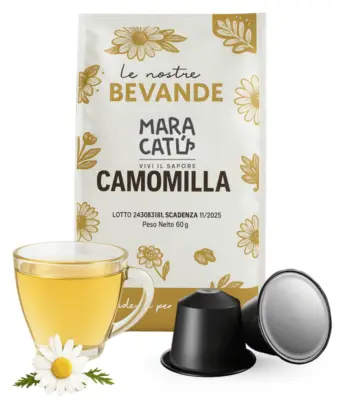
A caffeine-free afternoon. Decaffeinated coffee or a herbal infusion, with a square of dark chocolate. In the evening it works better than a strong espresso you then remember for hours.
A gift. A coffee selection matched to the recipient's machine system, plus one jar of cream or a box of dragées. It is one of the most common reasons customers come back to us — because a gift like that does not sit in a cupboard afterwards.
If you want to put together a pairing for a particular occasion, or work out what suits your favourite blend, write to us: our team will gladly help you choose.
Popular products
All products
More





More on this topic
More

Coffee capsules vs traditional: what to choose for home?
Read article


Coffee Capsules Guide: How to Choose Your Perfect Taste
Read article

5 myths about capsule coffee
Read article
How to properly store coffee and coffee capsules: expert advice
Read article

Coffee at the office: choosing the system, the machine and the accessories for a team
Read article
Decaf coffee and infusions: what to drink in the afternoon and evening
Read article

How to taste coffee at home: a guide for beginners
Read article
Coffee brewing methods: moka pot, espresso, French press and filter — which to choose
Read article
Used coffee grounds: what to do with them instead of throwing them away
Read article

Coffee and sport: when caffeine helps and when it gets in the way
Read article

Caffeine in the cup: how much we really drink
Read article
Used capsules and pods: what to do with them
Read article