






Decaf coffee and infusions: what to drink in the afternoon and evening
An afternoon coffee without giving up the ritual
We have been talking to customers about coffee for more than fifteen years, and one sentence comes up constantly: “I don't drink it in the afternoon or I won't sleep.” We understand that entirely — but it usually means giving up not so much the caffeine as the whole ritual: the break, the aroma, the moment to yourself.
Meanwhile decaffeinated coffee has come a long way. Not long ago it was a compromise: flat, with an aftertaste, clearly inferior to the real thing. Today a well-made decaf gives full crema and a defined aroma, and few people would pick it out blind.
In this guide we explain how it is made, which systems you can find it in, and what else is worth keeping in the kitchen for the late afternoon — because teas and herbal infusions are the second half of the same story.
How decaffeinated coffee is made
This question comes up regularly at the counter, sometimes with a degree of suspicion. So let us be clear: caffeine is removed from the green bean, before roasting. Roasting happens afterwards, exactly as it does for regular coffee — which is why a well-made decaf keeps the character of the blend.
There are several methods. In the water process the beans are soaked in water and the caffeine is captured from the solution, while the aromatic compounds return to the bean. In the carbon dioxide process, pressurised CO₂ binds the caffeine and leaves most of the flavour compounds behind. There are also methods using food-grade solvents, permitted and strictly regulated.
In all of these processes only traces of caffeine remain in the finished coffee — few enough for the product to be called decaffeinated. It is not literally caffeine-free, though, which is worth knowing if you are particularly sensitive.
What does that mean in practice? That the quality of a decaf depends on exactly what the quality of any coffee depends on: the raw material, the blend and the roast. That is why differences between producers are more pronounced here than with regular coffee — and why it is worth finding the one that suits you.
Decaf is now available in every system
This is one of the things that has changed most. Not long ago decaf meant a single, almost accidental item in the range. Today you will find it in practically every system you might use day to day.
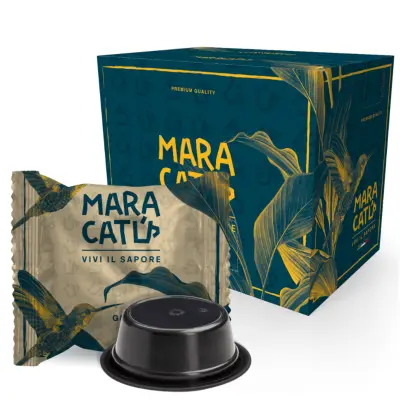
We stock decaffeinated capsules in versions compatible with Nespresso® and Lavazza A Modo Mio®, in Caffitaly® capsules and among the original Nescafé Dolce Gusto® capsules. For anyone who prefers classic espresso there are also decaffeinated 44 mm ESE pods, available in a compostable version.
A practical tip from our experience: decaf prefers a slightly shorter extraction. After decaffeination the bean can be a little more fragile, so a long pull more easily turns bitter at the end. If your decaf tastes “empty”, try shortening the cup by ten or fifteen millilitres before blaming the blend.
The second tip concerns stock. Decaf is bought less often, so it more easily sits open for too long. If you drink it occasionally, choose smaller packs or single-serve formats — capsules and pods have a protective barrier and hold their aroma far longer than an opened bag of ground coffee.
Teas and herbal infusions: the other half of the evening
Decaf solves part of the problem, not all of it. There are evenings when caffeine is not the issue at all — you simply want something lighter, less intense, gentler.
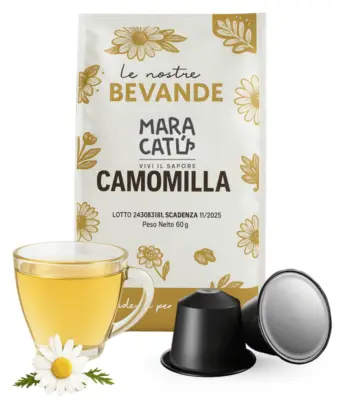
In the tea category we mainly offer organic Sandemetrio infusions in convenient filter bags: green tea, mint, mallow, ginger and lemon, plus fruit compositions — peach, forest fruits, strawberry and raspberry, cinnamon and orange.
These work particularly well in Polish homes in autumn and winter, when the evenings are long and you want something warm in your hands without reaching for another coffee. Some infusions are also available in pod format, following the same portioning logic as coffee pods.
Our buying advice: choose two infusions with genuinely different characters — one herbal, one fruity. A set of ten similar flavours looks attractive on the shelf, but in practice you use two and the rest goes stale.
The evening ritual: a few practical tips
We will close with a few things we suggest to customers who want a quieter version of the coffee ritual.
Keep decaf next to the regular coffee, not instead of it. It is the simplest way to avoid deciding in advance. One decaf capsule in the capsule holder alongside the rest does the job.
Think about guests. A decaf and a herbal infusion are two items that mean nobody has to decline. In Polish homes, where coffee is served often and late, that is genuinely practical.
Look after the machine. Evening coffee is usually gentler, so any flaw in the taste stands out more. Regular descaling and a good water filter matter more here than with a bold espresso.
Choose the cup. In the evening we drink more slowly, so the drink cools. A thicker cup holds the temperature longer, and that changes the experience more than most people expect.
If you would like help choosing a decaf for your machine, or a set of infusions for autumn evenings, get in touch: our team will gladly advise you.
Popular products
All products
More




More on this topic
More

Coffee capsules vs traditional: what to choose for home?
Read article


Coffee Capsules Guide: How to Choose Your Perfect Taste
Read article

5 myths about capsule coffee
Read article
How to properly store coffee and coffee capsules: expert advice
Read article

Coffee at the office: choosing the system, the machine and the accessories for a team
Read article

What to serve with coffee the Italian way: sweets, pistachio creams and specialities
Read article
How to taste coffee at home: a guide for beginners
Read article
Coffee brewing methods: moka pot, espresso, French press and filter — which to choose
Read article
Used coffee grounds: what to do with them instead of throwing them away
Read article

Coffee and sport: when caffeine helps and when it gets in the way
Read article

Caffeine in the cup: how much we really drink
Read article
Used capsules and pods: what to do with them
Read article