





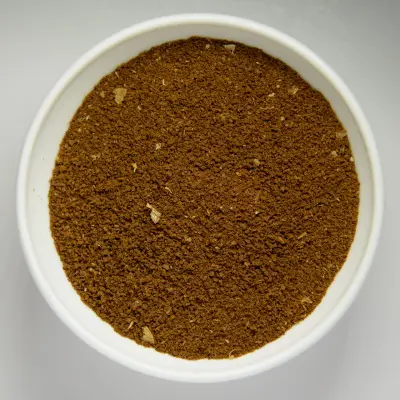
Used coffee grounds: what to do with them instead of throwing them away
A few kilos a year, straight into the bin
A household drinking a few coffees a day produces several kilos of grounds a year. Almost all of it goes into general waste.
That is a shame, because grounds are a material with fairly unusual properties: fine and abrasive, absorbent, slightly acidic, and containing nitrogen. Each of those has a use.
We have gathered only the uses we have tested ourselves or that have a clear explanation. A good deal of advice about grounds gets repeated without much thought, and we correct two examples at the end.
In the garden and in pots
This use has the firmest basis. Grounds contain nitrogen and enrich soil as they break down, so they work well in a compost heap as green material, layered with dry leaves or cardboard.
It is better not to tip them straight into a pot in a thick layer. Compacted grounds form a crust that water cannot pass through and that can go mouldy. A thin layer mixed into the soil works far better.
Acid-loving plants such as blueberries, azaleas or hydrangeas are a separate case. Fresh grounds are slightly acidic, so a small addition suits them. Worth remembering: after brewing, the acidity is already markedly lower than in dry coffee, so this is not a way to shift soil pH quickly.
In the kitchen and the bathroom
Grounds are finely abrasive, so they handle a burnt pan base or dried fat on a tray well. They do not scratch steel or cast iron the way a metal scourer does.
They also remove smells from hands. After chopping garlic or onion, rubbing the palms with damp grounds and rinsing is enough.
An open jar in the fridge absorbs odours much like bicarbonate, though it needs replacing every few days, because damp grounds eventually go mouldy.
Do not pour them down the sink. That is the most common mistake: grounds do not dissolve, they settle in the trap and in time form a blockage together with grease.
Two myths and one practical note
Grounds do not reliably repel slugs or ants. The idea has circulated for years, but in practice a barrier of grounds works briefly and stops as soon as it gets damp. Treat it as a curiosity rather than a plant-protection method.
Grounds are not a substitute for fertiliser. They contain nitrogen, but in a form the soil still has to process, so the effect is slow and spread over time. They are an addition to compost, not a feed.
The practical note concerns storage. Damp grounds start to go mouldy within two or three days. If you are collecting them for later, spread them thinly, let them dry and only then move them into a container. Dry, they keep for months.
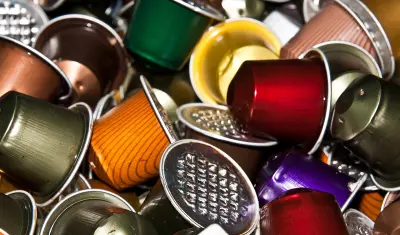
None of this applies to capsules and pods: there the grounds stay sealed inside the packaging and follow the collection rules of each system. Containers for used capsules are in the dedicated section.
For questions about a specific system, contact us. The Maracatú team will gladly help.
Image: ground coffee, Alorin, CC BY 4.0 (Wikimedia Commons).
Popular products
All products
More







More on this topic
More

Coffee capsules vs traditional: what to choose for home?
Read article


Coffee Capsules Guide: How to Choose Your Perfect Taste
Read article

5 myths about capsule coffee
Read article
How to properly store coffee and coffee capsules: expert advice
Read article

Coffee at the office: choosing the system, the machine and the accessories for a team
Read article

What to serve with coffee the Italian way: sweets, pistachio creams and specialities
Read article

Decaf coffee and infusions: what to drink in the afternoon and evening
Read article
How to taste coffee at home: a guide for beginners
Read article
Coffee brewing methods: moka pot, espresso, French press and filter — which to choose
Read article
Coffee and sport: when caffeine helps and when it gets in the way
Read article

Caffeine in the cup: how much we really drink
Read article
Used capsules and pods: what to do with them
Read article