


Coffee in Poland: from coffee brewed in a glass to espresso
Coffee in Poland: a long history and many customs
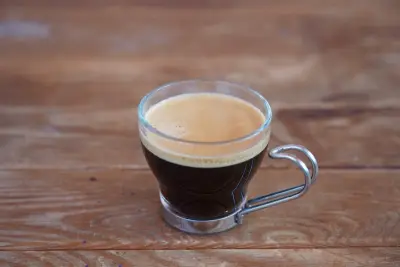
A glass in a metal holder, ground coffee covered with boiling water and a moment's wait until the grounds sink to the bottom: many people in Poland remember this picture from their family homes.
Today those same kitchens often hold coffee machines, moka pots and containers of capsules.
The path from coffee brewed in a glass to espresso made at home took several generations and shows well how everyday habits have changed.
Along the way came cups in manor houses, café tables, jars of instant coffee and the first home coffee machines.
Coffee has been present in Poland for several centuries, although for a long time only a small part of the population drank it.
How did a drink from distant lands become part of everyday life in Poland?
In this article we tell how coffee came to Poland and what the first coffee houses were like.
We also recall the coffee described in literature, grain coffee and coffee brewed in a glass.
At the end we look at the place that Italian espresso, the moka pot and capsules hold in Polish homes today.
We have covered the wider, European part of this story in our article on how coffee conquered Europe.
We describe the customs most often recalled in studies and family stories; in individual homes they may have looked different.
How coffee came to Poland: courts, towns and the first coffee houses
According to most accounts, coffee appeared in Poland in the seventeenth century, partly through trade and diplomatic contacts with the Ottoman Empire.
The name travelled the same road: the Polish word kawa derives, like the Italian caffè, from the Turkish kahve.
At first coffee was an exotic drink, known mainly at courts and in wealthy households.
The coffee plant needs a warm climate, so the beans have always been brought to Europe from afar.
At that time coffee was usually prepared in the Turkish manner, by boiling finely ground beans together with the water.
Not everyone was delighted at once: the Baroque poet Jan Andrzej Morsztyn wrote about coffee in one of his poems with evident dislike.
The relief of Vienna is linked with the popular legend of Jerzy Franciszek Kulczycki, who is said to have received sacks of coffee left behind by the Ottoman army and to have opened one of the first coffee houses in Vienna.
Historians treat this tale with caution, but it has become a lasting part of the coffee tradition of this part of Europe.
In the eighteenth century coffee grew ever more popular, and the first coffee houses began to operate in the largest towns, Warsaw among them.
The coffee house soon became a place for meetings, conversation and reading newspapers.
In time coffee also entered the homes of the nobility and the townspeople, usually first as a drink for special occasions and then as an increasingly everyday one.
To this day, arranging to meet for coffee in Poland means above all a meeting and a conversation.
The kawiarka of Pan Tadeusz and the artists' cafés
The best-known Polish description of coffee is found in Adam Mickiewicz's poem Pan Tadeusz.
Among other things, the poem describes a breakfast in a manor house at which coffee is served.
As we read, in such a house the preparation of coffee was the task of a dedicated person called the kawiarka.
This shows that coffee was treated with great care at the time, and that preparing it was regarded as a skill in its own right.
In those days beans were usually bought raw and roasted at home, shortly before the drink was prepared.
This took time and practice, as the beans had to be roasted, ground and only then brewed.
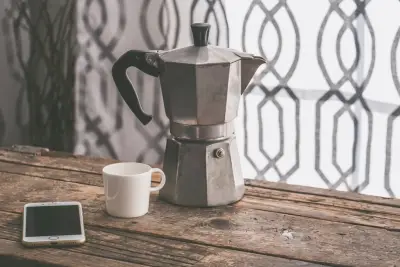
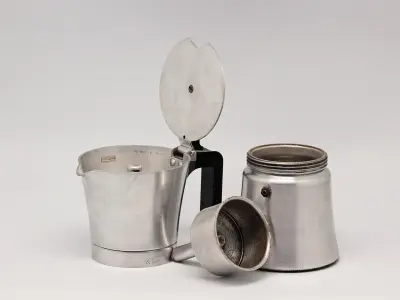
Today the word kawiarka means something else in Poland: the small stovetop coffee maker known in Italy as the moka.
The custom of adding cream or milk to coffee links Poland with the coffee houses of Central Europe.
To this day many people in Poland drink their coffee with milk or cream.
In the nineteenth century and at the beginning of the twentieth, coffee houses were an important setting for social and artistic life.
At Jama Michalika in Kraków, artists associated with the Zielony Balonik cabaret used to meet.
In interwar Warsaw the Mała Ziemiańska café was well known; at one of its tables sat the poets of the Skamander group.
There a cup of coffee was often the occasion for long conversations about literature, art and everyday matters.
In many cafés coffee was served with cakes and desserts, a custom that is still alive.
Grain coffee and coffee brewed in a glass
For a long time coffee made from beans was not an everyday drink for everyone in Poland.
In many homes people drank grain coffee, made from roasted cereals, often with added chicory.
Grain coffee is naturally caffeine-free, whereas cereals such as barley and rye contain gluten.
It still has its devotees today, and for many people its taste brings back childhood.
In the second half of the twentieth century a very simple way of preparing ground coffee became widespread: brewing it in a glass.
The ground coffee was put into a glass, covered with boiling water and left until the grounds sank to the bottom.
The glass was often placed in a metal holder with a handle or set on a saucer.
The drink was not filtered, so the last sip was usually left in the glass together with the grounds.
The grounds left at the bottom were sometimes also the occasion for a parlour game: telling fortunes from them.
Such coffee was commonly called Turkish coffee, although strictly speaking Turkish coffee is made in a small pot called a cezve, in which very finely ground coffee is heated together with the water.
In many homes it is also jokingly called plujka.
At that time coffee was hard to come by and highly valued, which is why it was readily given as a gift.
The method itself is close to what professional tasters do: in professional tasting, known as cupping, the coffee is likewise covered with hot water directly in the vessel.
Those who want to compare different ways of brewing can read our guide to coffee brewing methods.
From instant coffee to cafés and the home coffee machine
After the changes at the turn of the eighties and nineties, the choice of coffee in the shops grew quickly.
Instant coffee, which only needs hot water poured over it, became very popular at that time.
It was often drunk with milk or cream, which fitted well with the old habits.
Ready-made sachets of coffee with milk and sugar also appeared, prepared in a similar way.
Filter coffee machines with a paper filter and a glass jug also appeared in many homes and offices.
In time, cafés began to open in towns and cities where the menu was built on espresso and espresso-based drinks.
Many people tried a cappuccino, a latte or an americano there for the first time.
We describe the names of these drinks and the differences between them in our article on Italian coffee types.
Espresso machines began to appear in homes: manual, automatic and capsule models.
We have gathered appliances for the various systems in our coffee machines section.
More and more people also began to pay attention to the origin of the beans, the degree of roast and the grind.
Small roasteries and cafés where coffee is brewed by filter methods have also developed.
The old habits have not disappeared, however: in many a home coffee brewed in a glass or mug still has its place beside the machine.
Each of these ways can be a good choice for those who enjoy that taste and the ritual that goes with it.
Italian espresso in the Polish home today
Today different traditions meet in Polish homes, and the Italian way of drinking coffee is one of those that people readily choose.
Espresso is a small portion of coffee prepared under pressure, with its characteristic layer of crema on the surface.
At home it can be made in several ways, depending on preferences and the space available in the kitchen.
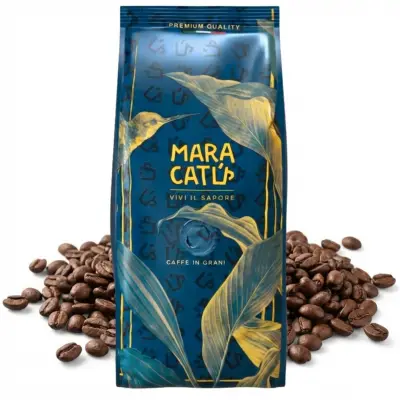
Those who like coffee made from freshly ground beans often choose a manual espresso machine with a grinder or an automatic machine, and will find the coffee in our coffee beans and ground coffee section.
The moka pot can be a good choice for those who value the simple ritual of brewing on the hob and a strong, aromatic coffee.
It was created in Italy in the nineteen-thirties and became widespread in Polish homes much later.
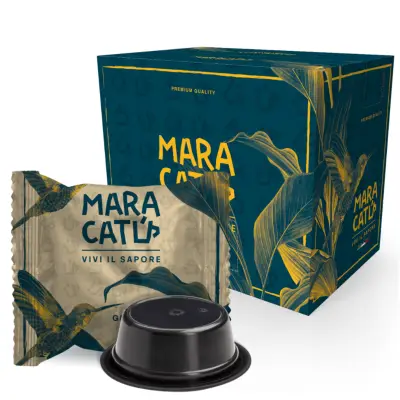
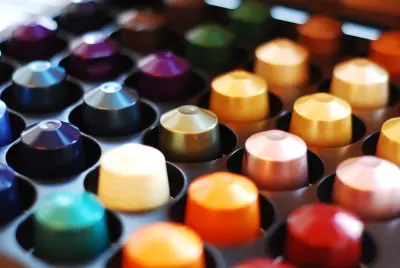
Capsules may suit those who want to make espresso quickly and in a similar way each time.
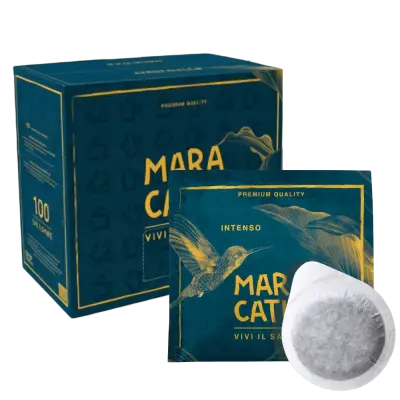
ESE pods are a ready portion of coffee in paper, intended for machines designed for this format, and you will find them in the coffee in ESE pods section.
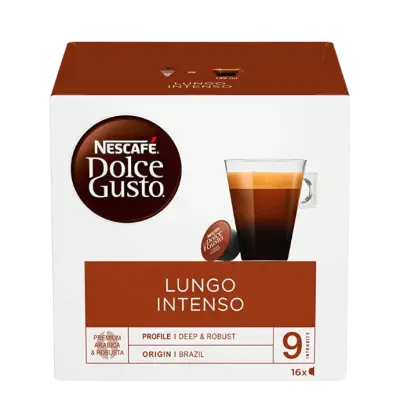
We have gathered capsules for the various systems and other coffees in the coffees section.
We describe the choice between beans and ground coffee in our guide to whole bean and ground coffee.
In Poland coffee often accompanies a long conversation at the table and a home-made cake.
For many people the natural choice at such times is a larger espresso-based drink, such as an americano or a cappuccino.
In the end, in many Polish homes a glass of coffee covered with boiling water and a cup of espresso now stand side by side, and each has its devotees.
If you would like to match coffee, capsules or pods to your own habits, contact us: the Maracatú team is always happy to help you choose.
Popular products
All products
More



More on this topic
More
Coffee capsules vs traditional: what to choose for home?
Read article


Coffee Capsules Guide: How to Choose Your Perfect Taste
Read article

5 myths about capsule coffee
Read article
How to properly store coffee and coffee capsules: expert advice
Read article
Coffee at the office: choosing the system, the machine and the accessories for a team
Read article
What to serve with coffee the Italian way: sweets, pistachio creams and specialities
Read article
Decaf coffee and infusions: what to drink in the afternoon and evening
Read article
How to taste coffee at home: a guide for beginners
Read article
Coffee brewing methods: moka pot, espresso, French press and filter — which to choose
Read article
Used coffee grounds: what to do with them instead of throwing them away
Read article
Coffee and sport: when caffeine helps and when it gets in the way
Read article
Caffeine in the cup: how much we really drink
Read article