



Caffitaly® capsules: how the system works and how to choose your coffee
Caffitaly®: one machine for coffee, tea and other drinks
A morning espresso before leaving home, a lemon tea in the afternoon and a camomile infusion in the evening: in many homes all of these drinks come from one small capsule machine.
This is the idea behind Caffitaly®, an Italian capsule system in which other drinks are available alongside coffee.
A machine of this kind can be convenient in a home where not everyone drinks coffee, or where people drink it at different times of day.
The system has its own capsule format, different from that of Nespresso®, Nescafé Dolce Gusto® or Lavazza A Modo Mio® machines.
That is why, before buying capsules, it helps to know which machine stands in the kitchen and, before buying a machine, which drinks it will be used for.
The good news is that the principles are simple and easy to remember.
In this guide we explain how a Caffitaly® capsule works and which machines it fits.
We also describe the types of machine, coffees of different intensity and drinks other than coffee.
At the end we gather a few notes on caring for the machine and storing the capsules.
You will find all the capsules for this system in our Caffitaly® capsules section, where the selection changes with the current assortment.
The guide is general in nature, and the details of individual products are given in their descriptions and on the packaging.
How a Caffitaly® capsule works and which machines it fits
A Caffitaly® capsule contains a measured portion of ground coffee, or the ingredients of another drink, sealed so that the machine can make one cup from it.
Once the capsule is inserted and the machine closed, hot water passes under pressure through its contents straight into the cup.
The coffee has already been ground and measured at the roastery, so using the machine usually comes down to inserting a capsule and pressing a button.
Each portion is sealed separately, so the coffee stays in the capsule until the moment it is prepared.
After the drink is made, the used capsule is removed from the machine or drops into a container, depending on the model.
The capsule format is specific to this system: Caffitaly® capsules do not fit machines of other systems, and capsules of other systems do not fit Caffitaly® machines.
In the descriptions in our shop these capsules are also indicated for Tchibo Cafissimo machines, which use the same format.
The descriptions of some original capsules state, on the other hand, that they are not intended for machines of the Caffitaly Professional line.
So before ordering it is worth reading the product description and checking the model name, which is usually found on the machine's casing or in the user manual.
The producer also states on the capsule packaging which system they are intended for.
Alongside the original capsules there are capsules from other brands, described as compatible, meaning they are made in a format that fits this system.
The word compatible refers to the fit with the machine, while the taste is described by the blend description and the markings on the packaging.
Caffitaly®, Tchibo and Cafissimo are trademarks of their respective owners.
Compatible capsules are made by other companies and are not products of these brands; the system name on the packaging only indicates which machines the capsule is intended for.
Caffitaly® machines: compact models and models with a milk frother
The Caffitaly® system includes compact machines and models with a built-in milk frother.
Compact machines usually take up little space, so they can be a good choice for a small kitchen or an office.
A model with an integrated frother may suit people who often make cappuccino and other coffees with milk.
Those who choose a compact machine can add a separate electric milk frother.
We have gathered the machines and frothers for this system in the Caffitaly® machines section, and the availability of individual models depends on the current assortment.
According to the product descriptions, some models recognise the capsule inserted and adjust the preparation of the drink to it.
The machine descriptions also mention a function that suggests a rinsing cycle after drinks other than coffee.
This is useful in a home where coffee, tea and chocolate are made in turn with the same machine.
Three questions can help when choosing a machine:
Space: how much room on the worktop can be given to the appliance.
Drinks: whether the household drinks mainly espresso or more often coffees with milk, tea and infusions.
People: how many people use the machine every day and whether guests often visit.
It is also worth checking in the manual what everyday use and cleaning of the chosen model involve.
Coffees for Caffitaly®: blends, intensity and decaffeinated
Most capsules in this system are coffee, from milder blends to very bold ones.
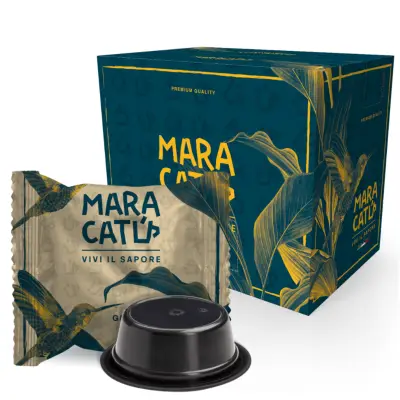
Our assortment includes original Caffitaly capsules in several blends of differing character.
Alongside them are capsules from other brands intended for the same system, for example with coffee from the Italian roaster Caffè Cagliari.
Blends are usually made from Arabica and Robusta beans in varying proportions, which each producer chooses in its own way.
Among the capsules there is also a coffee described as made entirely from Arabica, designed as a longer, American-style coffee.
For the coffees an intensity on a scale of up to ten is usually given, which helps with a first orientation.
Lower values generally indicate a milder coffee and higher values a bolder one.
Each producer sets its own scale, so it is most practical to compare coffees within one brand.
We explain how to read these markings in our guide on how to read a coffee label.
Intensity describes the impression in the cup and does not necessarily correspond to the caffeine content.
Blend descriptions usually also give flavour notes, for example cocoa or fruit; these are a guide, and the perception of taste can be subjective.
For those who wish to limit caffeine, a decaffeinated blend is available.
The decaffeination process greatly reduces the caffeine but does not remove it completely.
The capsules come in smaller and larger packs, so a new blend can first be tried in a smaller set.
Other drinks from a Caffitaly® machine: tea, infusions, chocolate
The Caffitaly® system also includes drinks that are not classic coffee.
Our assortment includes, among others, capsules of black tea with lemon, camomile infusion and a herbal tea with ginger and lemon.
You will find a wider choice of teas and infusions, also in other formats, in our tea section.
Tea and infusions from a capsule are prepared in much the same way as coffee, and the details for each model are described in the manual.
There are also drinks with milk in a single capsule, such as cappuccino and mocaccino, as well as a chocolate drink.
Drinks of this kind usually contain milk and often sugar as well, so in the case of an allergy or intolerance it is always advisable to read the ingredients on the packaging.
Cocoa naturally contains theobromine and small amounts of caffeine, so a chocolate drink should not be regarded as entirely caffeine-free.
Ginseng drinks form a separate group and are also available in a version with no added sugar.
Ginseng coffee is not automatically a caffeine-free drink, as it usually also contains coffee.
There is also a roasted barley drink, which is naturally caffeine-free.
Barley does, however, contain gluten and is not suitable for people with coeliac disease.
Those who prefer a lighter drink in the evening can read our article on decaffeinated coffee and infusions.
For children, the choice of drink should take into account age, caffeine, sugars and allergens.
Ingredients vary with the brand and the recipe, so the best source of information remains the ingredient list of the specific product.
Caring for the machine and storing the capsules
A capsule machine needs little care, but it needs it regularly.
After drinks with milk, chocolate or tea it is worth rinsing the machine as described in the manual, so that the next coffee keeps its own taste.
It is a good idea to empty the drip tray regularly and, in models that have one, the container for used capsules as well.
The water tank can be rinsed from time to time and filled with fresh water.
Over time limescale can build up in the machine, and how often it needs descaling depends, among other things, on the hardness of the water and on how often the appliance is used.
The procedure is described in the manufacturer's manual, and you will find suitable products in the filters and descalers for coffee machines section.
Capsules are most easily kept in their original packaging or in a closed container, in a dry place away from sources of heat and light.
With several kinds of drink it helps to organise the capsules in a container or drawer, so that coffee is easy to tell apart from tea and infusions.
With a larger supply it is worth paying attention to the best-before date given on the packaging.
The producer states on the packaging what to do with a used capsule, and waste sorting rules may differ from one municipality to another.
We write more about this in our article on what to do with used capsules.
In the end, Caffitaly® is a system in which one machine makes the morning espresso, the afternoon tea and the evening infusion, and in which everyone in the household can find something for themselves.
If you are unsure whether a capsule fits your machine, contact us: the Maracatú team is always happy to help you choose coffee and drinks for your machine.
Popular products
All products
More



More on this topic
More

Coffee capsules vs traditional: what to choose for home?
Read article


Coffee Capsules Guide: How to Choose Your Perfect Taste
Read article

5 myths about capsule coffee
Read article
How to properly store coffee and coffee capsules: expert advice
Read article

Coffee at the office: choosing the system, the machine and the accessories for a team
Read article

What to serve with coffee the Italian way: sweets, pistachio creams and specialities
Read article

Decaf coffee and infusions: what to drink in the afternoon and evening
Read article

How to taste coffee at home: a guide for beginners
Read article
Coffee brewing methods: moka pot, espresso, French press and filter — which to choose
Read article
Used coffee grounds: what to do with them instead of throwing them away
Read article

Coffee and sport: when caffeine helps and when it gets in the way
Read article

Caffeine in the cup: how much we really drink
Read article