





How coffee conquered Europe: from Venice to Vienna and Naples
Venice: the port of entry
We have been selling Italian coffee for over fifteen years and still meet the belief that espresso is as old as Italy. The truth is more interesting.
Coffee entered Europe through Venice in the second half of the sixteenth century, alongside goods from the Ottoman Empire. At first it was treated as a remedy, sold by apothecaries.
The first public rooms serving the drink opened in Venice in the seventeenth century. They set the model of the café as a place of conversation, not merely consumption.
The drink was not accepted at once. Part of the clergy saw a foreign custom in it, and the dispute closed only when coffee reached the tables of Rome.
For the first decades it was prepared in the Turkish manner, boiling fine grounds together with the water. Espresso was still two centuries and a steam engine away.
Vienna: the legend and the facts
The best-known story holds that Viennese cafés grew out of sacks abandoned by Ottoman troops after the siege of 1683.
Historians treat that version with caution: records indicate coffee was served in the city earlier as well, and the legend simplified a far more complex process.
What is certain is what Vienna added to the way it is drunk: milk and cream. The melange and later whipped-cream variants are an Austrian idea, not an Italian one.
The Viennese café also became a social institution, with newspapers, marble tables and the right to sit for hours over one cup. The model spread across Central Europe.
Coffee reached Poland by a similar route, through the court and the cities, and for a long time it was drunk in the Viennese way, with milk.
Naples: the machine changes everything
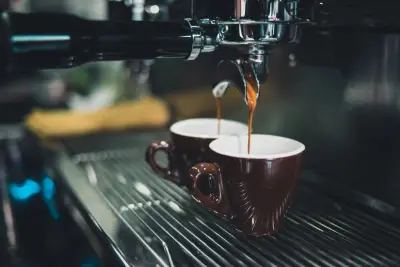
The turning point came from engineering. In the late nineteenth century Italian builders began forcing water through coffee under pressure instead of boiling it.
The aim was practical: to cut waiting time at the counter. Hence the name espresso, made on the spot and for that person, not brewed in advance.
Naples added a style of its own: the small cup, the dark roast and the habit of drinking standing at the bar, in a matter of seconds.
The same city produced the caffè sospeso, the custom of paying for an extra cup for whoever comes later. It is a detail that says much about the role of the bar in a neighbourhood.
Only after the Second World War did pumps arrive to stabilise pressure and give crema its present form. The espresso we know is therefore less than a century old.
Why Europe drinks so differently
Three routes of entry produced three traditions, which persist today and are easy to see on the shelf.
The south went for the short, strong serving and the dark roast. The cup is small, the coffee dense, and milk is added in the morning rather than after meals.
Central and northern Europe stayed with large volumes and lighter roasting, with filter brewing as the base. Here acidity is a virtue, not a fault.
The two schools need different beans. An espresso blend brewed as filter tastes heavy, and a light filter roast pulled as espresso comes out sour and hollow.
The practical conclusion: start from the brewing method rather than the country of origin. We set this out in our piece on brewing methods.
What remains of this history at home
Most of what remains comes from Vienna, though this is rarely remembered. The large mug and the milk are a Central European legacy, not an Italian one.
From Naples came the moka pot, which spread through Polish homes only towards the end of the twentieth century, and the habit of a small strong serving after lunch.
The past two decades added capsule systems, which brought the bar's repeatability into the kitchen. They have changed everyday drinking the most.
It is striking that all three traditions now live side by side in one flat: the moka at the weekend, capsules on weekdays, filter when guests come.
In our range of coffees we keep beans for all these scenarios, because hardly anyone drinks in a single way.
Three things worth remembering
First, espresso is not an ancient tradition but an industrial invention, perfected in the middle of the twentieth century.
Second, how people drink has always followed the technology available locally, not national character. A change of machine changed the habit within a generation.
Third, none of these traditions is better. They suit different beans, different roasts and different times of day.
That is why, when recommending a coffee, we ask first about the equipment, then about the time of day, and only last about preferred flavours. This order produces the fewest disappointments.
If you would like to match beans to the equipment you own, our team is available: please get in touch.
Popular products
All products
More







More on this topic
More
Coffee capsules vs traditional: what to choose for home?
Read article

Coffee Capsules Guide: How to Choose Your Perfect Taste
Read article
5 myths about capsule coffee
Read article
How to properly store coffee and coffee capsules: expert advice
Read article

Coffee at the office: choosing the system, the machine and the accessories for a team
Read article
What to serve with coffee the Italian way: sweets, pistachio creams and specialities
Read article
Decaf coffee and infusions: what to drink in the afternoon and evening
Read article
How to taste coffee at home: a guide for beginners
Read article
Coffee brewing methods: moka pot, espresso, French press and filter — which to choose
Read article
Used coffee grounds: what to do with them instead of throwing them away
Read article
Coffee and sport: when caffeine helps and when it gets in the way
Read article
Caffeine in the cup: how much we really drink
Read article