





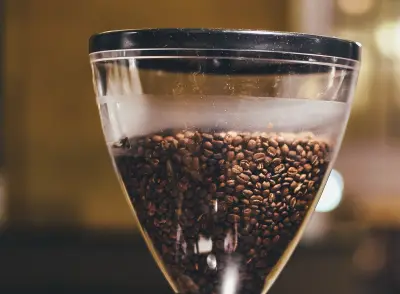
Beans for a bean-to-cup machine: how to choose them and care for the machine
The machine grinds by itself, but the beans still need choosing
A bean-to-cup machine takes almost all the work off the user: it doses, grinds, tamps and brews in well under a minute. Two decisions remain that genuinely shape the cup: which beans go into the hopper and how the grinder is set.
In this guide we gather the rules shared by the manuals of most manufacturers and combine them with our own experience in matching blends. The manual of your own machine always takes precedence.
All the coffee we mention comes from our coffee beans and ground coffee section, with the form of the coffee and the pack size stated for every product.
Espresso or milk drinks: the blend follows the way you drink
Before recommending a blend we ask one thing: what is drunk most often at home. A plain espresso and a cappuccino ask different things of the bean, and a single blend is rarely the best in both roles.
For espresso drunk without additions, blends with clear sweetness and a clean profile work well, often with a high share of arabica. The body is lighter, but the cup shows more nuance: nut, chocolate, a light fruity note.
With cappuccino, latte macchiato or flat white, milk mutes the aromas and thins the body. Fuller blends with a share of robusta do better here: they give a dense, lasting crema and a recognisable character even after the foamed milk goes in. We cover the differences between the two species separately in our post on arabica and robusta.
In our range this split is visible in the Maracatú blends: Gran Crema and Intenso are designed for a full, creamy espresso and for milk drinks, while the 100% Arabica suits a lighter cup drunk black. Borbone too, available as beans in the Red and Blu versions, gives a dense crema that stands up to milk.
If both are drunk at home, a sensible compromise is a balanced, medium-bodied blend, for example Audace from Kimbo.
Roast level: why very dark, shiny beans are a problem
The simplest test for roast level is to look at the bean itself. A matte bean, dry to the touch, has been roasted light or medium. A shiny bean with a visible film of oil has been roasted very dark: the oils have migrated to the surface.
In a bean-to-cup machine that oil is a technical problem, not a matter of taste. Oily beans stick together in the hopper and stop sliding down to the grinder, and a thin film settles on the burrs and in the chute that carries ground coffee to the brew group.
That is why the manuals of most manufacturers advise against oily, caramelised, coated and flavoured beans. Some state outright that only plain roasted beans without any treatment belong in the grinder.
The safe choice is a medium or medium-dark roast: developed enough for the espresso to have sweetness and body, but with no oil on the surface. Most Italian espresso blends fall into this range, including the vending lines for machines in use all day, such as the one-kilo formats from Lavazza made for automatic machines.
Freshness: a hopper for a few days, not for weeks
The bean hopper is convenient, but it is not a storage container. The lid is usually not airtight, light gets in, and heat rises from the grinder and the boiler. Coffee that sits there for two weeks loses aroma faster than in a closed bag.
Hence a simple rule: pour in what will be used within a few days and keep the rest in the original bag, tightly closed, away from light and the hob. A bag with a one-way valve lets gas out without letting oxygen in, so as long as it stays closed it protects better than the machine hopper. We also advise against topping up old beans with fresh ones: better to use up the contents, wipe the hopper with a dry cloth and only then pour in a new portion.
A one-kilo bag, the standard in the beans section, makes sense where coffee is drunk every day. At three or four cups a day it lasts roughly a month, a period over which a closed pack holds its aroma well. With a single coffee a day, a smaller format is the more sensible choice.
We write about storing coffee in more depth, including ground coffee and capsules, in our guide on how to store coffee properly.
Grinder and decaf: two settings that change the cup
The grind level is usually adjusted with a dial inside the bean hopper. Here the manuals are unanimous: change it one step at a time and only while the grinder is running, because with the burrs at rest a trapped bean can damage the mechanism. The effect shows only after two or three coffees, because the chute between the grinder and the brew group still holds the previous dose.
The cup itself suggests the direction. If the espresso runs fast, watery and almost without crema, the grind is too coarse. If it drips slowly and tastes bitter and astringent, the grind is too fine. After a change of blend a one-step correction is entirely normal.
Many machines also have a separate opening for ground coffee that bypasses the grinder: one level scoop goes straight to the brew group. The most common mistake is a dose that is too large or pressed down, which blocks the brew group; the scoop should be full but loose.
That opening is the natural answer for decaf drunk occasionally, in the evening or by one person in the household: the beans in the hopper stay untouched. If decaf is the main coffee instead, it is simpler to fill the hopper with decaffeinated beans such as Borbone Dek.
Cleaning: milk system, brew group and descaling
The milk system is cleaned daily, ideally after every use. Milk residue in the tube and frother spoils within hours and blocks the flow. Most machines with automatic frothing have a short milk rinse programme to run after a round of cappuccinos.
The brew group, the removable block where the coffee is tamped and brewed, needs rinsing roughly once a week. Lukewarm water is enough, without washing-up liquid, followed by drying before it goes back in.
Descaling is the one task that stays invisible until it is too late. The machine reports the need to descale by itself, based on water used, and the signal should not be postponed. A filter in the water tank softens the water and, as manufacturers state, extends the intervals between descaling, but does not replace it. Liquid descalers and replaceable tank filters are gathered in our filters and descalers section.
If you are unsure which blend suits the way you drink coffee, or which form of coffee fits your machine, please get in touch. The Maracatú team will be glad to advise.
Popular products
All products
More








More on this topic
More

Coffee capsules vs traditional: what to choose for home?
Read article


Coffee Capsules Guide: How to Choose Your Perfect Taste
Read article

5 myths about capsule coffee
Read article
How to properly store coffee and coffee capsules: expert advice
Read article

Coffee at the office: choosing the system, the machine and the accessories for a team
Read article

What to serve with coffee the Italian way: sweets, pistachio creams and specialities
Read article

Decaf coffee and infusions: what to drink in the afternoon and evening
Read article
How to taste coffee at home: a guide for beginners
Read article
Coffee brewing methods: moka pot, espresso, French press and filter — which to choose
Read article
Used coffee grounds: what to do with them instead of throwing them away
Read article

Coffee and sport: when caffeine helps and when it gets in the way
Read article

Caffeine in the cup: how much we really drink
Read article