






Barista championships and coffee festivals: what happens there and what it means for us at home
What a barista competition looks like
The hall is usually quieter than expected. You hear the grinder, the tamper knocking on the bench, the hiss of milk being steamed and the host's voice counting down the time. The audience sits a few metres away and watches the competitor's hands.
The station looks like a tidy kitchen. An espresso machine, two grinders, scales, milk pitchers, cups warmed in advance, cloths in a single row. Before the routine the competitor has preparation time: dialling in the grind, pulling a few test shots, checking the temperature and wiping away every drop.
Then the real part begins. In many competitions the competitor serves the judges three kinds of drink: an espresso, a milk drink and a signature drink, where coffee meets other ingredients that bring out its character. With each one they explain the bean's origin, the roast and what the judges should find in the cup.
Judging runs on two tracks. The sensory judges sit at the table, wait for the cup, smell it, taste with a spoon and note whether the story matches what they find. The technical judge stands behind the competitor and looks at something else entirely: whether the basket was clean, whether milk went to waste, whether the station ends up the way it started.
When the host calls time, the competitor usually just stands there. The audience applauds; the judges keep writing a moment longer.
Latte art, brewers cup, cup tasting
The barista competition is the best known, but not the only one. Others have grown up alongside it, and each tests a different skill.
In latte art only the picture on the surface counts. The competitor pours steamed milk into espresso to form a pattern, and the judges compare it with the drawing shown beforehand. They look at contrast, symmetry and whether the pattern is actually what was promised.
Brewers cup is a competition without an espresso machine. The coffee is brewed by hand, by pour-over or immersion, and the judges assess only what ends up in the cup. Less of a spectacle, but very close to a morning at home with a dripper or a French press.
Cup tasting looks humbler still. Rows of cups stand on the table in groups of three; in each group two coffees are the same and one is different. The task is to find the odd one, quickly and without error. It is a pure test of the palate, and something that can be repeated at your own table. We wrote about comparing coffees at home in a separate post on tasting.
There are also roasting competitions and coffee with spirits, but those are narrower specialisms.
The festival: many coffees side by side
A festival is an entirely different situation. Instead of one stage and silence there is a hall full of stands, chatter, the smell of freshly ground coffee hanging over everything, and queues at the stands someone has already praised.
The greatest value of a festival is trying a dozen or so coffees in one afternoon, one after another, from different roasters and countries. The same Ethiopian coffee from two roasters can taste completely different, and only side by side does that become obvious.
The second reason is conversation. At the stand there is usually the person who roasted or chose that coffee, happy to explain why it is roasted lighter, what changed in this harvest and which method suits it. In a shop that conversation is usually missing.
What stays in the memory after a festival is rarely a list of names. It is two or three moments: the coffee that surprised, the cup that was hard to put down, and the conviction that smaller bags bought more often are the better habit. In our whole bean and ground coffee section the roast date is on every pack for exactly this reason.
What carries over into the home kitchen
One might assume the competition world is too far from the kitchen to take anything from it. We think the opposite: a few habits from the stage carry over into the home without any equipment or ambition.
Freshness comes first and is the simplest. Competitors do not use months-old coffee, because they know the aroma slips away week by week after roasting. At home this means a glance at the roast date when buying, and smaller bags opened as needed.
Then repeatability. On stage every espresso has to match the last, which is why the coffee is weighed and the time measured. Kitchen scales accurate to the gram are one of those accessories that change more than a new machine, because they show why today tastes different from yesterday.
Notes look the least impressive and give the most. The judge writes everything down; the competitor keeps a notebook of parameters. At home one line is enough: coffee, dose, grind, verdict. After two weeks that sheet says more than all the guides.
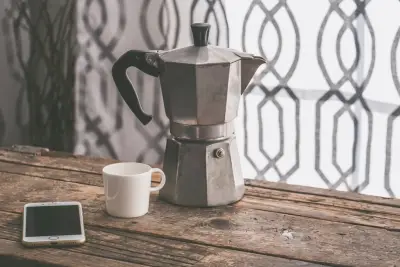
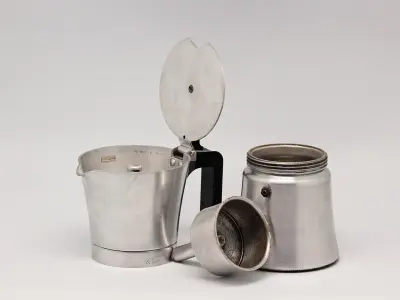
And the last thing, rarely said at competitions because it is obvious: the method should suit the coffee and the person, not the other way round. We gathered an overview of equipment and approaches in our post on brewing methods.
No stage required
Nobody has to brew coffee championship-style to drink it well. Sensory judges drink the same coffee at home as everyone else, only more attentively.
If you feel like trying something from that world, one step is enough: the same coffee brewed the same way for a week, with one written remark a day. No new equipment, nothing to buy.
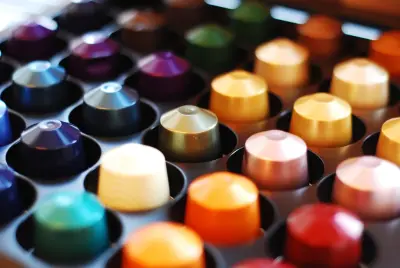
This applies to capsule machines as well. With Nespresso®, Dolce Gusto® or A Modo Mio® there is no grinder and no scale, but there is the choice of capsule, the amount of water and a warmed cup, and those are also worth writing down.
In our coffee section we describe every item the way a festival stand would: origin, roast profile and the method we recommend it for.
And if a festival or a competition leaves you wondering where to start, the Maracatú team will gladly advise. Please get in touch.
Popular products
All products
More







More on this topic
More

Coffee capsules vs traditional: what to choose for home?
Read article


Coffee Capsules Guide: How to Choose Your Perfect Taste
Read article
5 myths about capsule coffee
Read article
How to properly store coffee and coffee capsules: expert advice
Read article

Coffee at the office: choosing the system, the machine and the accessories for a team
Read article
What to serve with coffee the Italian way: sweets, pistachio creams and specialities
Read article
Decaf coffee and infusions: what to drink in the afternoon and evening
Read article
How to taste coffee at home: a guide for beginners
Read article
Coffee brewing methods: moka pot, espresso, French press and filter — which to choose
Read article
Used coffee grounds: what to do with them instead of throwing them away
Read article

Coffee and sport: when caffeine helps and when it gets in the way
Read article
Caffeine in the cup: how much we really drink
Read article