






Espresso crema: where it comes from and what it says about the coffee
The golden layer on an espresso: what crema is
On the surface of a freshly made espresso there appears a thin layer, golden to hazelnut in colour. In Italy it is called crema, and many people see it as the first sign of a well-made coffee.
It is not milk foam and it is not an addition. Crema comes from the coffee itself at the moment of brewing and belongs to the espresso as much as its aroma does.
Anyone who looks closely at the cup notices that the crema is sometimes thick and lasting, and at other times thin and quick to disappear. Where do these differences come from?
There is also the question of whether crema says anything about the quality of the coffee. The answer is not as simple as it might seem.
In this guide we explain how crema forms, what influences its amount and colour, and what you can expect from the different ways of making coffee at home.
At the end we gather a few practical tips that generally help to obtain a nice crema, whatever machine you use every day.
How crema forms during brewing
Espresso differs from many other brewing methods in that hot water passes through ground coffee under pressure and in a short time.
Roasted coffee contains a natural gas that builds up in the bean during roasting and then gradually escapes from it.
It also contains natural oils, which give espresso its body and part of its aroma.
When water under pressure flows through the coffee, it releases both this gas and the oils. Tiny bubbles mix with the brew and rise to its surface.
This is how crema forms: a fine, delicate foam that stays on the espresso for a while, then gradually thins out and disappears.
Its colour usually ranges from golden to hazelnut brown, often with darker streaks. The shade depends, among other things, on the blend and the degree of roasting.
This is precisely why crema is characteristic of espresso. With methods in which water passes through the coffee without pressure, such a layer generally does not form or is barely visible.
Crema also affects how the coffee is perceived. It can hold part of the aromas above the cup, and in the mouth it gives a fuller, more velvety texture.
What influences crema: blend, roast, freshness and grind
The amount and persistence of crema depend on several factors that act at the same time. The first is the composition of the blend.
Blends containing Robusta generally give a more abundant and longer-lasting crema. This is one of the reasons why Robusta is often present in Italian blends intended for espresso.
Coffees made only of Arabica may give a more delicate and lighter crema, but often with a different aromatic profile. We wrote about the differences between the two species in our article Arabica or Robusta.
The second factor is the roast. The degree of roasting mainly affects the colour of the crema: darker-roasted blends usually give a darker crema, lighter-roasted ones a more golden one.
The third factor is freshness. The gas that forms the crema escapes from the bean gradually from the moment of roasting, so recently roasted coffee usually gives more of it than coffee that has been sitting for a long time.
Ground coffee loses this gas faster than whole beans. That is why, at home, the time between grinding and brewing also matters.
The fourth factor is the grind and the preparation itself. With a coarser grind the water flows faster and the crema tends to be thinner; with a finer grind the flow slows down and the coffee may become more bitter.
Water temperature, the cleanliness of the machine and the even distribution of the coffee in the filter basket also matter. Each of these elements can change the look of the cup.
In our whole bean and ground coffee section you can find blends with different compositions and roast levels, to choose according to your own taste and brewing method.
Does crema indicate the quality of the coffee?
This is a question many people ask themselves when looking at the cup. The answer is this: crema is one of the visible signs, but not the only one and not the decisive one.
So what can be read from it?
An even, persistent crema usually indicates that the coffee was fresh and that the brewing went well. It is a useful clue, especially at home, where it is not always possible to assess every stage of preparation.
A thick crema, however, does not in itself mean a better coffee. A blend with more Robusta generally gives more crema, but the choice between it and a coffee made only of Arabica depends on taste, not on the thickness of the foam.
On the other hand, a thin crema does not mean that there is something wrong with the coffee. It may be due to more time having passed since roasting, to a coarser grind or to the character of the blend itself, and the coffee may still taste very good.
The colour of the crema, too, says more about the degree of roasting and the composition of the blend than about the class of the bean.
Crema on its own usually tastes slightly bitter and astringent. That is why some people stir their espresso with a teaspoon before drinking, while others prefer to drink it unstirred; both options are equally fine.
In the end, it is taste that decides the quality of an espresso. Espresso is judged by its aroma, its body, the balance between bitterness and sweetness and how long the aftertaste lingers.
That is why it is worth treating crema as one of the clues and not as a verdict on the coffee. What matters most is still whether the cup tastes good.
Crema at home: portafilter machine, bean-to-cup machine, capsules, pods and moka pot
The brewing method largely determines what crema you can expect at home. Each method gives a different result and none of them is wrong.
Below we sum up what can generally be expected from the most common home appliances.
A portafilter machine offers many ways to influence the cup: the grind size, the dose of coffee and the tamping depend on the person brewing. In return it requires a little practice, and the crema may change with every adjustment.
A bean-to-cup machine grinds the beans immediately before brewing, which generally favours crema. The result depends above all on the beans and on the grinder setting; we write about choosing coffee for this type of machine in our separate guide to coffee for bean-to-cup machines.
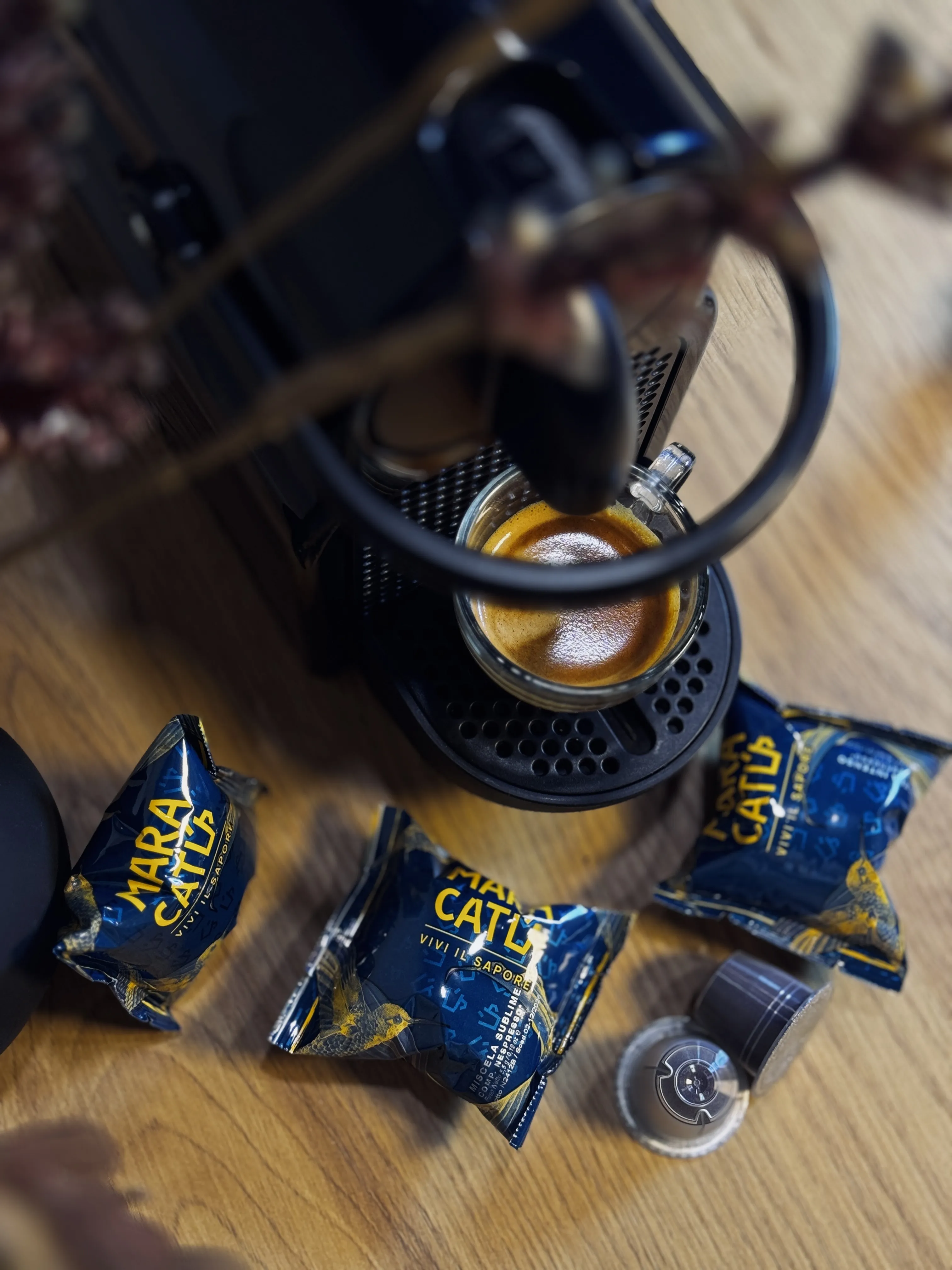
Capsules contain a dose of coffee that is hermetically sealed, so its freshness is usually well protected until the moment of brewing. A capsule machine generally gives a clear, even crema and a repeatable result every time. In our section of Nespresso® compatible capsules you can find blends of different intensities.
ESE pods are coffee already ground and pressed at the roastery, enclosed in a paper disc. In a pod machine, or in a portafilter machine with the appropriate filter basket, they give an espresso with crema, without adjusting grind and dose.
We described this format in our article on ESE pods, and the choice of blends is in our ESE 44 mm pods section.
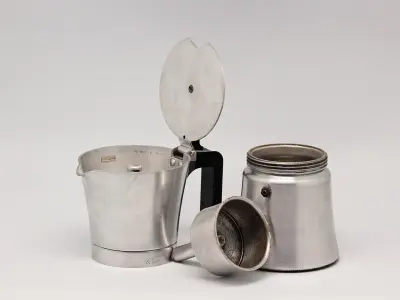
The moka pot works differently from a machine: water passes through the coffee thanks to heat and steam, without the pressure typical of espresso. That is why moka coffee usually has little crema or none at all.
This in no way counts against the moka pot. Moka coffee has its own character and its own tradition; it simply looks different in the cup from espresso made with a machine.
If you are still choosing an appliance, in our coffee machines section you can compare the different types available in the current range.
A few practical tips
Regardless of the type of machine, a few simple habits usually help to obtain a nice crema. These are the ones we pay most attention to:
Fresh coffee, kept in a tightly closed package, in a cool, dry place, away from light and strong smells. We write more about this in our article on storing coffee and capsules.
A warmed cup, because an espresso has a small volume, cools quickly in a cold cup, and the crema may fade sooner.
A clean machine, rinsed and descaled regularly according to the manufacturer's instructions. Limescale can affect the water temperature and flow, and therefore the crema as well. Suitable products are in our filters and descalers section.
Unhurried preparation, meaning coffee evenly distributed in the filter basket and a constant, repeatable dose, if the machine allows such settings.
It is also worth observing your own cup. A change in a single element, for example the blend or the grind size, can usually be seen straight away on the surface of the espresso.
To sum up, crema is the natural effect of brewing under pressure: the gas and oils contained in roasted coffee form a delicate foam, whose amount and colour depend on the blend, the roast, the freshness and the way of preparation.
It is a pleasing and useful sign, but it does not replace taste, which remains the most important criterion for judging any coffee.
If you are unsure which blend or which coffee format suits your machine best, contact us: the Maracatú team is always happy to help you choose.
Popular products
All products
More








More on this topic
More

Coffee capsules vs traditional: what to choose for home?
Read article


Coffee Capsules Guide: How to Choose Your Perfect Taste
Read article

5 myths about capsule coffee
Read article
How to properly store coffee and coffee capsules: expert advice
Read article

Coffee at the office: choosing the system, the machine and the accessories for a team
Read article
What to serve with coffee the Italian way: sweets, pistachio creams and specialities
Read article
Decaf coffee and infusions: what to drink in the afternoon and evening
Read article

How to taste coffee at home: a guide for beginners
Read article
Coffee brewing methods: moka pot, espresso, French press and filter — which to choose
Read article
Used coffee grounds: what to do with them instead of throwing them away
Read article

Coffee and sport: when caffeine helps and when it gets in the way
Read article

Caffeine in the cup: how much we really drink
Read article